Process Performance, Application Scenarios and Purchasing Guide of High Weather Resistant Industrial Steel Plate
In modern industrial manufacturing and infrastructure construction, anti-corrosion steel materials play a vital role.
They directly determine the service life and safety stability of various engineering projects.
Among mainstream anti-rust metal materials, galvanized steel sheet stands out with stable performance.
It has become a preferred base material for global industrial and building anti-corrosion solutions.
Ordinary carbon steel plates easily oxidize and rust under humid and open-air environments.
Long-term corrosion will cause structural damage and increase frequent maintenance costs.
Hot dipped zinc-coated steel materials effectively isolate air and moisture to prevent rusting.
This article analyzes the process, advantages, applications and purchasing tips of industrial steel plates.
Professional Production Process of Hot Dipped Galvanized Materials
Hot dip galvanizing technology is recognized as a mature and economical anti-corrosion process.
It creates a dual protective structure that spraying and cold galvanizing cannot achieve.
The whole production strictly follows international industrial manufacturing standards and procedures.
High-quality cold-rolled or hot-rolled steel substrates are selected as raw base materials.
Raw plates will go through degreasing, acid pickling, cleaning and full drying treatment.
These steps completely remove surface oil, rust and impurities to ensure coating adhesion.
Clean steel plates are soaked in high-temperature molten zinc liquid at about 450 degrees Celsius.
Zinc elements and steel base produce metallurgical reaction for tight molecular combination.
Two protective layers form naturally after cooling and finishing processing.
The inner zinc-iron alloy layer bonds closely with the original steel plate substrate.
The outer pure zinc layer covers every surface corner with uniform and dense texture.
This dual-layer structure greatly improves overall anti-corrosion and weather resistance.
You can view the hot dipped galvanized steel sheet international manufacturing standard to learn detailed technical parameters
Standardized automated production avoids missing plating, zinc slag and uneven coating defects.
Finished plates feature flat surface, stable thickness and excellent overall mechanical properties.
It lays a solid foundation for subsequent deep processing and long-term outdoor use.
9 Core Performance Advantages of Industrial Galvanized Steel Sheet
1. Superior Anti-corrosion and Weather Resistance
Anti-rust and weather-resistant performance is the core strength of galvanized steel sheet.
Ordinary bare steel rusts quickly in rainy, coastal and high-humidity working scenarios.
Continuous corrosion will lead to plate thinning, perforation and overall structural failure.
Uniform dense zinc coating blocks corrosive media effectively for long-term protection.
Indoor service life can exceed 20 years without extra anti-rust maintenance treatment.
Outdoor open-air use can maintain stable performance for 8 to 15 years continuously.
This advantage greatly reduces project replacement frequency and later operating costs.
It is highly suitable for long-term fixed construction and municipal infrastructure projects, matching the application scope of color coated steel coil.
2. Strong Coating Adhesion and Not Easy to Peel Off
The zinc protective layer forms metallurgical combination instead of simple physical sticking.
The bonding strength is far higher than ordinary paint and spray coating materials.
The plate can bear bending, stamping, cutting and rolling deep processing operations.
The zinc layer will not crack, fall off or peel during various mechanical processing.
Complete coating protection is always maintained even after long outdoor exposure.
3. Excellent Machinability and Plasticity
Industrial zinc-coated steel plates own balanced hardness and excellent toughness.
Flat and smooth plate surface supports diversified secondary processing technologies.
Punching, shearing, profiling and bending can be completed stably and efficiently.
It can be processed into various building components, hardware parts and equipment shells.
Good welding performance meets prefab building and mechanical equipment production needs.
4. Complete Specifications and Customizable Size
Conventional plate thickness ranges from 0.3mm to 6.0mm for diversified project demands.
Common standard widths include 1000mm, 1250mm and 1500mm for universal engineering use.
Factories provide fixed-length cutting, slitting and flattening personalized services.
Zinc coating weight can be customized from 60g/㎡ to 275g/㎡ as required.
Low zinc layers suit indoor use, while high zinc layers adapt to harsh outdoor environments.
5. Smooth Surface Without Secondary Spraying
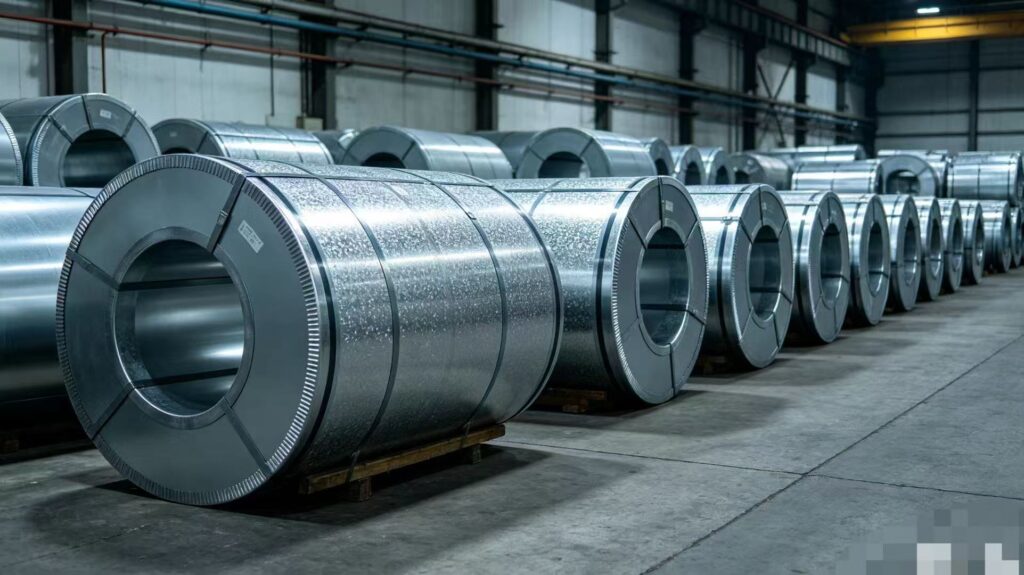
Finished hot dipped plates present uniform and natural fine zinc spangle texture.
The surface is bright, clean, burr-free and free of obvious processing defects.
Most conventional application scenarios require no secondary painting or anti-corrosion spray.
It saves plenty of construction labor time and extra coating material costs for buyers.
Neat surface greatly improves the overall appearance grade of finished engineering works.
6. High Cost Performance for Mass Engineering Projects
Compared with stainless steel and aluminum plates, zinc-coated steel has lower unit price.
It maintains reliable anti-corrosion performance while controlling total project investment.
Long service life and low maintenance rate reduce comprehensive use cost obviously.
It becomes the most cost-effective choice for large-scale infrastructure and factory projects.
7. Stable Performance in Complex Working Conditions
Qualified zinc-coated steel adapts to temperature changes and high-humidity environments.
It works stably in windy, sandy and mild acid-base industrial atmosphere areas.
Physical and chemical properties will not decay rapidly with environmental changes.
It ensures long-term structural stability of outdoor buildings and mechanical equipment.
8. Environmentally Friendly and Recyclable
Modern hot dip galvanizing production adopts standard environmentally friendly technology.
No harmful residual substances are generated during the whole manufacturing process.
Finished plates are non-toxic and fully compliant with international green standards.
Steel substrates can be 100% recycled and reused to support low-carbon development
9. Sufficient Inventory and Stable Supply
Large-scale factories adopt automated assembly line production for stable daily output.
Sufficient spot inventory supports bulk engineering orders and foreign trade export demands.
Short delivery cycle and stable supply meet continuous procurement needs of enterprises.
It effectively avoids project delay caused by material shortage and insufficient stock.
Main Application Fields of High-quality Galvanized Steel Sheet
1. Construction and Prefabricated Building Industry
The construction field consumes the largest market share of galvanized steel sheet.
It is widely used in factory roof panels, wall panels and steel structure brackets.
It also applies to ceiling keels, agricultural greenhouse frames and prefab house parts.
Excellent outdoor anti-rust ability solves the corrosion problem of building steel structures.
It guarantees long-term safe operation of industrial plants and agricultural facilities.
2. Home Appliance and Light Industry Manufacturing
High-precision thin zinc-coated plates serve household appliance shell production.
They are commonly used for refrigerator, washing machine and air conditioner structures.
Smooth surface meets high appearance standards of finished home appliance products.
Stable anti-corrosion performance avoids internal hardware rust failure in long-term use.
3. Municipal Infrastructure and Traffic Facilities
Municipal and traffic engineering needs durable outdoor anti-corrosion steel materials.
The plates are used for highway guardrails, street light poles and traffic sign supports.
It also matches cable trays and power distribution accessory manufacturing demands.
Stable weather resistance eliminates safety hazards caused by long-term outdoor corrosion.
4. Machinery Hardware and Agricultural Facilities
Zinc-coated steel plates are popular in mechanical processing and livestock breeding.
They adapt to humid breeding environments and frequent mechanical working conditions.
Stable structural performance supports warehouse equipment and container accessory usage.
It covers most medium and low-strength industrial hardware manufacturing scenarios.
Professional Purchasing Guide for Industrial Galvanized Steel Sheet
1. Distinguish Hot Dipped and Cold Galvanized Products
Many buyers confuse hot dipped and cold galvanized steel in bulk procurement.
Cold galvanizing forms only a thin sprayed zinc layer with poor adhesion performance.
Cold plated products peel and rust quickly under outdoor open-air conditions.
Formal engineering and export projects must select standard hot dipped galvanized steel sheet.
It ensures qualified quality and long-term anti-corrosion effect of the whole project.
2. Select Zinc Layer Weight According to Usage Environment
Reasonable zinc coating selection depends on actual indoor or outdoor usage scenarios.
60g to 120g low zinc layers are enough for dry indoor decoration and home appliance parts.
180g to 275g high zinc layers are recommended for coastal and humid outdoor projects.
High zinc thickness resists strong corrosion and prolongs outdoor service life greatly.
3. Check Surface Quality and Factory Inspection Report
Bulk buyers need to carefully check plate flatness and zinc flower uniformity.
Qualified products have no missing plating, black spots, peeling or surface deformation.
Suppliers must provide official factory test reports and material certification files.
It ensures products meet international standards and pass export commodity inspection.
Market Development Trend of Modern Zinc Coated Steel Materials
Global industrial upgrading raises higher standards for building anti-corrosion materials.
Traditional ordinary steel plates cannot meet modern long-service engineering requirements.
The industry is developing toward high zinc layer and fingerprint-resistant surface treatment.
Ultra-flat plate type and customized sizes become mainstream market development trends.
High-performance treated zinc plates gain popularity in high-end construction fields.
They are widely recognized in home appliance export and international engineering projects.
As a mature and cost-effective anti-corrosion base material, galvanized steel sheet will
continue to occupy a core position in global industrial and construction material markets.
Its comprehensive performance and economic advantages are irreplaceable for a long time.
It will keep upgrading with industrial technology to adapt to diverse future demands.
Conclusion
Hot dipped zinc coating technology gives galvanized steel sheet comprehensive performance edges.
The nine core advantages cover anti-rust, processing, cost and supply all aspects.
From construction to home appliances, municipal works to agricultural equipment,
galvanized steel sheet remains the most reliable anti-corrosion metal substrate choice.
For overseas traders and engineering purchasers, choosing standard hot-dipped products
can cut long-term maintenance costs and guarantee stable project operation cycle.
With continuous process iteration, the market demand for qualified zinc-coated plates
will keep rising, bringing stable business opportunities for global material buyers.