
Buying Hot Rolled Steel Coils: 5 Technical Standards for B2B Buyers
Buying hot rolled steel coils represents a critical backbone operation for heavy engineering, pipe manufacturing, structural steel fabrication, and automotive sectors globally. Produced through high-temperature rolling mills operating above the recrystallization point, hot rolled carbon steel provides excellent workability, structural strength, and outstanding cost-efficiency. However, ensuring you receive the exact material characteristics for your industrial machinery requires verified parameter checks.
Whether you are importing vast tonnages for local processing or distribution, analyzing mill specifications protects your bottom line. In this procurement guide, we break down the 5 essential technical dimensions you must verify when buying hot rolled steel coils from global metal manufacturing networks.
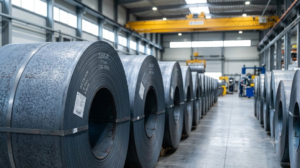
1. Selecting the Right Steel Grades
The first structural decision when buying hot rolled steel coils is defining the correct metallurgical grade. Commercial applications usually rely on basic low-carbon steels such as ASTM A36, SS400, or S235JR, which deliver superb weldability and formability for general structures. For pressure vessels or automotive chassis requiring enhanced load-bearing limits, you must shift your procurement parameters toward high-strength low-alloy (HSLA) options like Q355B or S355JR.
2. Precision Thickness and Width Tolerances
Because hot rolled products experience natural thermal contraction during the cooling phase, dimensional variability is inherently higher than cold-rolled alternatives. When buying hot rolled steel coils, you must enforce strict compliance with international manufacturing benchmarks like ASTM A568 or EN 10051. Premium suppliers control thickness tolerances tightly within $\pm 0.15\text{ mm}$ to prevent premature tool wear in your subsequent blanking or stamping lines.
3. Surface Condition: Black vs. Pickled & Oiled (HRPO)
The cooling process leaves a dark, oxidized iron layer known as “mill scale” on the steel surface. Sourcing managers should evaluate the ideal condition based on their secondary manufacturing processes:
| Surface Finish Type | Processing Characteristics | Best Application Environment |
|---|---|---|
| As Rolled (Black Steel) | Retains mill scale, highly cost-effective, raw finish | Heavy structural beams, general machinery frames, shipping containers. |
| Pickled & Oiled (HRPO) | Acid-washed to remove scale, coated in anti-rust oil layer | Precision laser cutting, deep drawing, stampings, automotive parts. |
| Skin Passed | Lightly cold-rolled post-hot rolling for flatter sheets | High-flatness cladding, brackets, and structural building panels. |
4. Coil Weight and Mechanical Properties
Logistical compatibility inside your processing facility dictates the outer diameter and maximum weight parameters of your delivery. When buying hot rolled steel coils, buyers must coordinate heavy-duty crane capacities with the mill’s output capabilities—typically ranging from 15 to 30 metric tons per coil. Furthermore, verify the certified yield strength, tensile strength, and minimum elongation metrics to ensure flawless mechanical performance.
5. Strategic Sourcing and Export Logistics Checklist
Verify Edge Conditions: Mill Edge vs. Slit Edge
Hot rolled coils come with either raw “mill edges” (untrimmed, wavy edges containing slight thermal cracks) or “slit edges” (precision-trimmed to exact widths). When requesting quotations, choose slit edges if your production line requires immediate, ready-to-feed dimensions without secondary width trimming costs.
Enforce Third-Party Mill Test Certificate (MTC) Audits
Industrial supply chain transparency is non-negotiable. Before wire transfers are authorized, mandate a complete EN 10204 3.1 Mill Test Certificate covering comprehensive chemical analysis (Carbon, Manganese, Silicon content) and destructive impact test results.
Conclusion: Secure Reliable Hot Rolled Supply Streams
Mastering raw material criteria mitigates the risk of structural field failures and component cracking. If your operation requires pre-galvanized corrosion protection, read our comprehensive technical overview for buying galvanized steel substrates to protect exposed steel parts.
By executing procurement frameworks engineered in compliance with ISO international quality systems, you maintain complete reliability across your industrial distribution channels.
At SBTGI Heavy Industries, we provide high-precision carbon steel, HSLA structural alloys, and pickled-and-oiled hot rolled metal configurations tailored to custom project requirements. Contact our steel engineering desk today to simplify your buying hot rolled steel coils operations and request localized container-load quotes.
Contact Us:
📧 Email: jenny@sbtgi.com
📱 WhatsApp/WeChat: +86 13905436749
🌐 Website: www.sbtgi.com