PPGI Roofing Guide: 5 Critical Sourcing Tips for B2B Buyers
When it comes to modern industrial construction, agricultural buildings, and residential infrastructure, finding a reliable PPGI roofing guide is essential to make a smart commercial purchase. Prepainted galvanized steel roofing tiles (commonly known as color steel sheets) have become the go-to material worldwide. Thanks to their lightweight nature, exceptional corrosion resistance, and vibrant aesthetic appeal, they offer a perfect blend of durability and cost-effectiveness for large-scale procurement projects.
However, sourcing the right color-coated steel sheets involves more than just picking a color from a commercial catalog. To ensure your roof withstands harsh weather conditions for decades without premature chalking or rusting, you need to master the technical parameters. In this comprehensive PPGI roofing guide, we will break down everything international buyers need to know before placing their next bulk container order.
1. Understanding the Anatomy of a PPGI Roofing Sheet
According to our technical PPGI roofing guide benchmarks, a high-quality prepainted corrugated steel sheet is not just a piece of painted metal; it is a multi-layered engineered product designed to fight atmospheric rust and degradation. Understanding these structural layers helps in evaluating manufacturer quality before signing a contract:
- Base Metal: Typically hot-dip galvanized steel (GI) or galvalume steel (GL) coil providing structural integrity.
- Zinc/AZ Coating: The sacrificial protective layer that prevents the core steel from rusting even if scratched.
- Pre-treatment Layer: A chemical conversion coating that enhances adhesion between the zinc layer and top paint.
- Primer Coating: Provides extra corrosion resistance and ensures a perfectly smooth surface for the top coat.
- Top Paint Layer: The visible colored layer formulated to resist UV rays and weathering.
2. Key Technical Specifications for B2B Sourcing
When sending a Request for Quote (RFQ) to steel mills or manufacturing partners, being precise about your parameters ensures accurate pricing. As highlighted in our standard PPGI roofing guide protocols, here are the core metrics to specify during your vendor selection process:
Thickness & Width Dimensions
The thickness of color steel tiles directly affects their load-bearing capacity, snow load tolerance, and wind resistance. Common thickness ranges from 0.12 mm to 0.8 mm, with 0.3 mm to 0.5 mm being the most widely utilized for standard industrial roofing. Note that raw coil width translates to an effective covering width of around 840 mm or 1050 mm after wave-forming corrugation.
Zinc Coating Weight & Paint Film Thickness
These two protective factors dictate the actual outdoor lifespan of the roof. For standard outdoor roofing, a minimum zinc layer of Z60 (60 g/m²) is recommended. High-end coastal or highly corrosive industrial environments may require Z275 (275 g/m²). Standard commercial sheets feature a 15 µm to 25 µm top coat and a 5 µm to 7 µm back coat.
3. Profile Optimization: Wave vs. Trapezoidal Designs
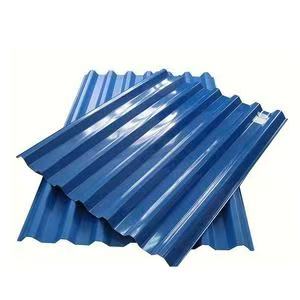
The corrugated profile is engineered for functional utility, managing water drainage dynamics and overall cross-sectional structural strength. This section of our updated PPGI roofing guide helps you choose the right shape for project engineering requirements:
| Profile Type | Best Used For | Key Engineering Advantage |
|---|---|---|
| Wave / Sinusoidal Profile | Residential roofs, traditional structures, agricultural fencing | Excellent timeless aesthetic appeal and smooth, continuous water runoff. |
| Trapezoidal / Box Profile | Industrial warehouses, commercial factories, large spans | Higher structural load capacity, allowing for wider purlin spacing and reduced steel framing costs. |
4. Critical Sourcing Checklist to Avoid Purchasing Pitfalls
Verify Base Metal Thickness (BMT) vs. Total Coated Thickness (TCT)
Some unreliable suppliers might quote a thickness based on TCT (which includes the layers of zinc and paint) rather than the actual BMT. Always explicitly clarify with your manufacturing partner that your required specifications refer to the Base Metal Thickness to ensure you get the structural integrity you paid for.
Match Paint Chemistry to Your Local Climate
Polyester (PE) paint is highly cost-effective and perfectly suitable for mild climates and standard commercial projects. However, Fluorocarbon (PVDF) paint offers outstanding UV resistance and color retention, making it essential for tropical regions with intense sunlight or heavy chemical exposure industrial zones. Follow this core PPGI roofing guide rule to maximize product lifespan.
5. Strategic Procurement with Cybertron Metal Technology
Investing in precisely specified corrugated panels saves thousands of dollars in long-term maintenance costs. As a premium manufacturer, we recommend reading our related PPGI coil production standards to better understand how raw materials affect final sheet quality.
By thoroughly verifying the base metal quality, zinc coating mass, and paint formulations according to ASTM International standards, you guarantee a roofing infrastructure built for longevity.
At Cybertron Metal Technology, we specialize in manufacturing premium, high-precision color-coated steel roofing solutions tailored exactly to your local market demands and structural standards. Contact our technical engineering team today to get your professional copy of our complete PPGI roofing guide and
At Cybertron Metal Technology, we provide high-precision, multi-layered color steel options engineered specifically to survive harsh environmental shifts. Contact our sales engineering division today to streamline your buying PPGI coil workflow and request tailored container load quotations for your local market.
Contact Us:
📧 Email: jenny@sbtgi.com
📱 WhatsApp/WeChat: +86 13905436749
🌐 Website: www.sbtgi.com
competitive wholesale volume quotes for your next project container load.