If you are sourcing coated steel for roofing, wall cladding, appliance manufacturing, or automotive parts, you have likely encountered the term PPGI coil. But what exactly is this material, how is it made, and how do you ensure you are specifying the right one for your project?
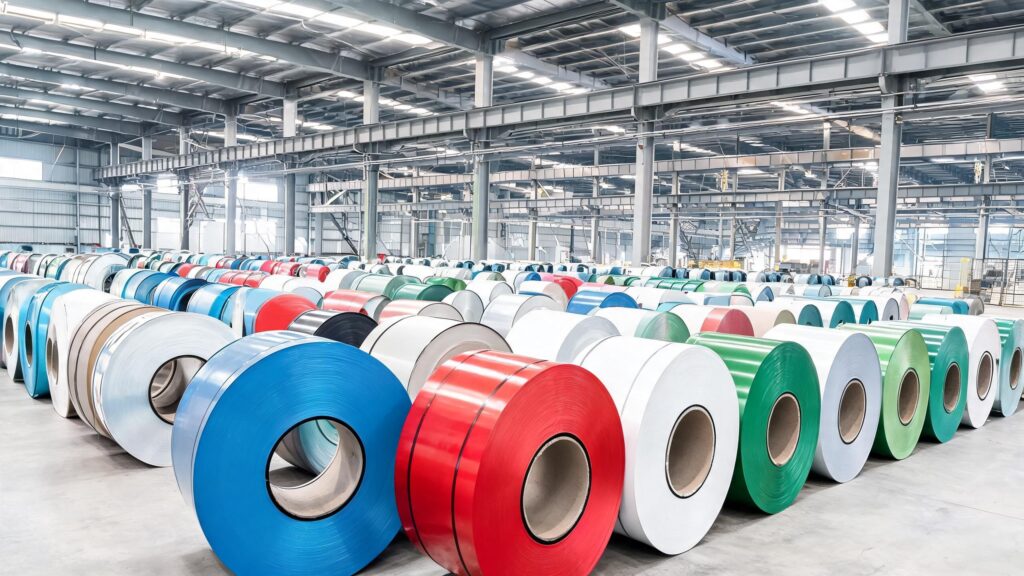
Many overseas importers look for high-quality prepainted galvanized steel coil for building projects
This comprehensive guide covers everything B2B buyers need to know about prepainted galvanized steel — from paint coating systems and substrate specifications to quality standards, application selection, and international sourcing best practices. Whether you are a procurement manager, project engineer, or import specialist, this guide will help you make informed decisions when ordering color coated steel.
What Is Prepainted Galvanized Steel?
A PPGI coil (Prepainted Galvanized steel coil) is a galvanized steel product that has been cleaned, chemically pre-treated, and coated with an organic paint system in a continuous coil coating line before being delivered to the end user. The result is a flat-rolled steel product that combines the structural strength of steel, the sacrificial corrosion protection of a zinc layer, and the aesthetic plus barrier protection of a factory-applied paint finish.
According to the hot-dip galvanizing process described on Wikipedia, the zinc layer forms a metallurgical bond with the steel substrate at approximately 450°C. In prepainted galvanized steel, this coated substrate then passes through a coil coating line where paint is applied in a controlled, continuous process — producing a more uniform and durable finish than post-fabrication painting.
Key characteristics of this material include:
- Pre-applied paint coating: Typically 15–25 µm per side (top coat), plus primer and backer coats
- Galvanized substrate: Zinc coating ranging from Z40 to Z275 (per ASTM A653)
- Color variety: RAL colors, custom shades, wood-grain, marble, and metallic finishes
- Formability: Designed to be roll-formed, bent, stamped, or corrugated after painting without cracking the coating
- UV and weather resistance: Depending on the paint system, service life outdoors can reach 7–25+ years
How Color Coated Steel Is Manufactured
The manufacturing process involves two main stages: galvanizing (creating the zinc-coated substrate) and coil coating (applying the paint system). Understanding this process helps buyers evaluate supplier quality.
Stage 1: Hot-Dip Galvanizing
Cold-rolled steel strip is cleaned, annealed, and immersed in a molten zinc bath at ~450°C. Air knives control the zinc coating thickness. The result is a galvanized steel coil (GI coil) that serves as the base metal. The zinc coating weight is designated per ASTM A653/A653M (e.g., Z120, Z180, Z275).
Stage 2: Continuous Coil Coating
The galvanized strip is unrolled and passes through a continuous coating line where the following steps occur:
- Cleaning and degreasing: Alkaline cleaning removes rolling oils and surface contaminants
- Surface pre-treatment: Chromate or chromate-free conversion coating promotes paint adhesion
- Primer application: A corrosion-inhibiting primer (typically 5–8 µm) is applied to the top surface
- Top coat application: The main paint layer (15–25 µm) is applied via roller coater
- Backer coat: A protective backer coat (5–10 µm) is applied to the reverse side
- Curing: The coated strip passes through an oven at 200–260°C to cure the paint
- Winding: The finished pre-painted coil is rewound for shipment or further processing
Paint Systems: PE vs. SMP vs. PVDF
The paint system is the single most important factor determining outdoor durability and cost. Three main options dominate the market:
| Property | Polyester (PE) | Silicon Modified Polyester (SMP) | PVDF |
|---|---|---|---|
| UV Resistance | Good | Very Good | Excellent |
| Outdoor Durability | 7–10 years | 10–15 years | 20–25+ years |
| Chalk Resistance | Fair | Good | Excellent |
| Color Retention | Moderate | Good | Excellent |
| Formability | Excellent | Good | Good |
| Cost Level | Economical | Mid-range | Premium |
| Best Applications | Indoor panels, appliances, general roofing | Outdoor roofing, wall cladding in mild climates | Architectural facades, coastal/marine, high-end buildings |
For most general-purpose outdoor roofing and wall applications, an SMP-coated product offers the best balance of durability and cost. Reserve PVDF for premium architectural projects where 20+ year color retention is critical.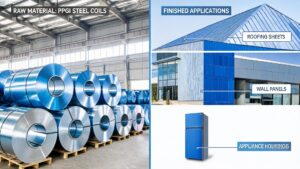
Specifications: What Buyers Need to Specify
When ordering pre-painted galvanized steel, a complete specification should include the following parameters. Omitting any of these can lead to receiving material that does not meet your application requirements.
Base Metal Specifications
- Steel grade: e.g., DX51D (commercial quality), DX52D (forming), DX53D (deep drawing), S280GD/S350GD (structural)
- Coating designation: Zinc coating weight per ASTM A653 — Z40, Z70, Z100, Z120, Z180, Z275, Z350
- Spangle type: Regular, minimized, or zero spangle (zero spangle preferred as it provides a smoother paint substrate)
- Thickness: Typically 0.12–1.5 mm
- Width: Standard widths: 914mm, 1000mm, 1219mm, 1250mm; slit widths available
- Coil weight: Typically 3–8 metric tons per coil
Paint Coating Specifications
- Paint system: PE, SMP, or PVDF (specify explicitly)
- Top coat thickness: Typically 15–25 µm (measure with magnetic gauge)
- Primer thickness: 5–8 µm
- Backer coat thickness: 5–10 µm
- Color: RAL code or custom color sample (require color matching approval)
- Gloss level: Matte, semi-gloss, or high-gloss (per Gardner gloss meter)
- Total coating thickness: Top + primer + backer, typically 25–45 µm total
Performance Requirements
- Pencil hardness: ≥ 2H for general use, ≥ 3H for high-wear applications
- T-bend flexibility: ≤ 3T for formable grades, ≤ 5T for structural grades
- Reverse impact: ≥ 6J (pass — no cracking at specified impact energy)
- Salt spray resistance: ≥ 500 hours for PE, ≥ 1000 hours for SMP, ≥ 1500 hours for PVDF
- UV/weather resistance: Per ASTM G154 or ISO 11507 cyclic UV exposure test
Applications by Industry
The versatility of color coated steel makes it suitable for a wide range of industries. Here are the primary application segments:
| Industry | Typical Application | Recommended Paint System | Typical Thickness |
|---|---|---|---|
| Construction & Roofing | Corrugated roofing sheets, wall cladding, insulated sandwich panels | SMP or PVDF | 0.3–0.8 mm |
| Appliances | Refrigerator panels, washing machine housings, microwave exteriors | PE | 0.4–1.0 mm |
| Automotive | Interior trim, door panels, non-exposed body parts | PE or SMP | 0.6–1.2 mm |
| Furniture & Storage | Metal cabinets, shelving, storage lockers | PE | 0.4–0.8 mm |
| Architecture | Facade panels, ceiling systems, decorative elements | PVDF | 0.5–1.5 mm |
| Transportation | Container panels, trailer walls, railway interiors | SMP | 0.8–1.5 mm |
PPGI vs. PPGL: What Is the Difference?
Buyers often encounter both PPGI and PPGL in the market. The difference lies in the substrate:
- PPGI (Prepainted Galvanized): Uses a hot-dip galvanized (GI) substrate — pure zinc coating. Cost-effective, excellent sacrificial protection, standard for most applications.
- PPGL (Prepainted Galvalume): Uses a galvalume (GL) substrate — aluminum-zinc alloy coating (55% Al, 43.5% Zn, 1.5% Si). Superior corrosion resistance (2–6x longer life in some environments), better heat reflectivity, but higher cost.
For projects in coastal, industrial, or high-corrosion environments, PPGL may justify the premium. For standard roofing and appliance applications, prepainted galvanized steel remains the most cost-effective choice.
Quality Standards and Certifications
Pre-painted galvanized steel is manufactured to several international standards. Always specify the applicable standard in your purchase order:
- ASTM A653/A653M (USA) — Base metal and zinc coating requirements
- ASTM A755/A755M (USA) — Standard for coil-coated metallic-coated steel sheet
- EN 10169 (Europe) — Continuously organic-coated steel flat products
- JIS G3312 (Japan) — Prepainted hot-dip zinc-coated steel sheet and coil
- GB/T 12754 (China) — National standard for prepainted galvanized steel sheet
- AS/NZS 1366.1 (Australia/New Zealand) — Sheet and coil for roofing and cladding
How to Choose a Reliable Supplier
Selecting the right supplier is critical for ensuring consistent quality, on-time delivery, and long-term performance. Here are the key criteria:
- Production line verification: Confirm the supplier operates their own galvanizing line and coil coating line, not just a trading company. Request photos, videos, or virtual factory audit.
- Standard compliance: Verify the supplier can produce to the specific standard you require (ASTM, EN, JIS, or GB). Request a Mill Test Certificate (MTC) sample.
- Coating thickness verification: The MTC should show actual measured paint thickness values, not just nominal. Cross-check with your own gauge upon receipt.
- Color matching capability: Request a color sample for approval before bulk production. A reliable manufacturer will provide free samples within 5–7 days.
- Third-party inspection: Engage SGS, Bureau Veritas, or TÜV to inspect the material before loading. Verify coating thickness, adhesion (cross-hatch test), flexibility (T-bend test), and color match.
- Export packaging: For sea freight, the material must be packed with desiccant bags, VCI paper, steel edge protectors, and sealed outer wrapping to prevent “white rust” and paint damage during ocean transit.
- Minimum order quantity (MOQ): Typical MOQ is 5–10 metric tons per color. Lower MOQ may indicate a trading company reselling from stock.
- Production lead time: Standard production takes 15–25 days. Allow extra time for custom colors (RAL matching adds 5–7 days).
Common Sourcing Mistakes to Avoid
- Specifying only color, not paint system: “Blue pre-painted steel” is not a specification. Always specify the paint system (PE/SMP/PVDF), coating thickness, and performance requirements.
- Under-specifying zinc coating weight: Using Z40 for outdoor applications to save cost. This leads to cut-edge red rust within 2–3 years. Minimum Z120 for outdoor use.
When purchasing prepainted galvanized steel coil, verifying zinc coating weight is essential.
- Ignoring backer coat: Some suppliers reduce cost by applying only a thin backer coat. Insist on 5–10 µm backer for corrosion protection of the reverse side.
- No color approval before production: Producing a full order without an approved color sample leads to costly rejections. Always approve samples first.
- Inadequate packaging for sea freight: Without proper desiccant and VCI protection, the material will develop white rust (zinc hydroxide) during 3–4 weeks at sea.
- Not requesting performance test data: Salt spray, UV resistance, and T-bend test results should be provided for any material intended for outdoor use.
Frequently Asked Questions
What is a PPGI coil?
A PPGI coil (Prepainted Galvanized steel coil) is a galvanized steel product that has been cleaned, pre-treated, and coated with an organic paint layer in a continuous coil coating line. It combines the corrosion resistance of galvanized steel with the aesthetic and protective properties of paint, making it ideal for roofing, wall cladding, appliances, and automotive applications.
What paint systems are used for prepainted galvanized steel?
The three main paint systems are: Polyester (PE) for general-purpose use with 7–10 year outdoor durability, Silicon Modified Polyester (SMP) for enhanced UV resistance with 10–15 year durability, and Polyvinylidene Fluoride (PVDF) for premium weatherability with 20+ year durability. The choice depends on the service environment and performance requirements.
Choosing proper paint coating is critical for long service life of prepainted galvanized steel coil
What standards apply to color coated steel?
Pre-painted galvanized steel is manufactured to several international standards: ASTM A755/A755M and ASTM A653/A653M (USA), EN 10169 (Europe), JIS G3312 (Japan), and GB/T 12754 (China). These standards specify requirements for base metal, zinc coating, paint thickness, adhesion, flexibility, and weather resistance.
All our prepainted galvanized steel coil is manufactured following these global industry standards
How to choose a reliable prepainted steel supplier?
Verify: (1) the supplier operates their own galvanizing and coil coating lines, (2) certifications to ASTM/EN/JIS standards, (3) Mill Test Certificates with measured paint thickness, (4) third-party inspection reports, (5) color sample approval before bulk production, and (6) export experience with proper sea-freight packaging including desiccant and VCI paper.
A qualified factory can deliver stable prepainted galvanized steel coil with full inspection reports
What is the difference between PPGI and PPGL?
PPGI uses a hot-dip galvanized (GI) substrate with a pure zinc coating, while PPGL uses a galvalume (GL) substrate with an aluminum-zinc alloy coating (typically 55% aluminum, 43.5% zinc, 1.5% silicon). PPGL offers superior corrosion resistance and heat reflectivity, but PPGI is more cost-effective for standard applications.
Many construction buyers select prepainted galvanized steel coil for wall cladding and roofing projects
What is the typical lifespan of prepainted galvanized steel outdoors?
Outdoor lifespan depends on the paint system and environment: PE-coated material lasts 7–10 years, SMP-coated lasts 10–15 years, and PVDF-coated can last 20–25+ years. In corrosive environments (coastal, industrial), lifespan may be 30–50% shorter. Proper zinc coating weight (minimum Z120) is also essential for achieving rated lifespan.
The quality of prepainted galvanized steel coil determines the service life of roofing panels
What is the MOQ for ordering pre-painted steel coil?
You may also check our article about zero spangle galvanized coil for more substrate knowledge.
The typical minimum order quantity is 5–10 metric tons per color. Custom RAL colors may require a higher MOQ. Some suppliers offer lower MOQ from stock inventory, but this typically indicates a trading company rather than a direct manufacturer.
Conclusion
Specifying and sourcing the right PPGI coil requires attention to paint system selection, zinc coating weight, coating thickness, performance testing, and supplier qualification. By following the guidelines in this article, B2B buyers can confidently order prepainted galvanized steel coil that meets their application requirements and delivers long-term performance.
At Shandong Cybertron Metal Technology Co., Ltd., we supply color coated steel complying with international standards including ASTM, EN, and JIS, with full Mill Test Certificates, color sample approval, and third-party inspection support.
We can customize prepainted galvanized steel coil according to your required width, thickness and RAL color.
Our products are available in PE, SMP, and PVDF paint systems with RAL color matching and custom specifications.
Contact us to discuss your requirements, request samples, or obtain a quotation.
Email: jenny@sbtgi.com
WhatsApp: +86 13905436749
Website: www.sbtgicom
Address: Shandong, China