5052 aluminum coil is a non-heat-treatable aluminum-magnesium product selected when a buyer needs a practical balance of corrosion resistance, forming capability, weldability, and moderate strength. The alloy number alone, however, does not define an order. Temper, thickness, width, surface condition, dimensional tolerance, mechanical-property limits, coil geometry, and inspection documents must all be stated before a supplier can manufacture or quote the material correctly.
This procurement guide explains the eight checks that turn a broad inquiry into a verifiable coil specification. It is written for buyers sourcing sheet and coiled sheet for fabricated enclosures, transport components, appliances, general sheet-metal work, and equipment exposed to moisture. Values shown below are specification concepts, not a substitute for the limits in the standard edition named on the purchase order.
What Is 5052 Aluminum Coil?
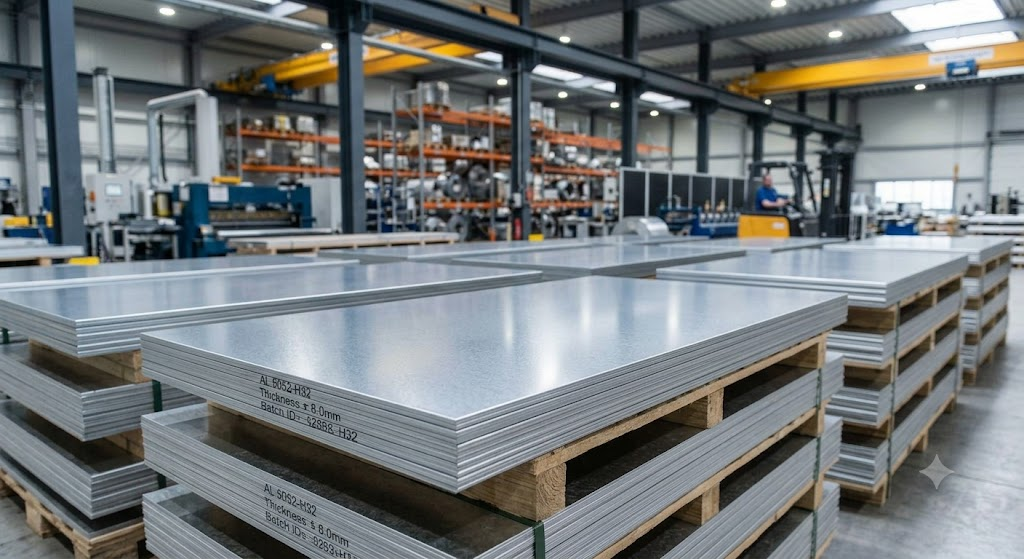
5052 belongs to the 5xxx family of wrought aluminum-magnesium alloys. The Aluminum Association’s international designation register lists magnesium at 2.2–2.8% and chromium at 0.15–0.35%, with aluminum as the remainder after the permitted limits for other elements. Magnesium contributes solid-solution strengthening, while the alloy remains non-heat-treatable. Its final condition is therefore controlled mainly by annealing and strain hardening rather than by a solution-heat-treatment and aging cycle.
The Aluminum Association standards program describes 5xxx alloys as having moderate-to-high strength, good weldability, and resistance to corrosion in marine environments. It identifies electronics as one common 5052 application. An older Aluminum Association comparative table also lists 5052-O for sheet-metal work, hydraulic tube, and appliances. These references explain why buyers commonly consider the alloy for formed and welded components, but application suitability still depends on design, exposure, joining method, and required certification.
For flat products in US practice, ASTM B209/B209M is the central product specification for aluminum and aluminum-alloy sheet and plate. Its scope covers flat sheet, coiled sheet, and plate in listed alloys and tempers. The purchase order should state the applicable edition and whether inch-pound or metric requirements govern; buyers should not combine values from different unit systems or from an obsolete datasheet.
1. Specify the Exact 5052 Aluminum Coil Temper
Temper is the first technical decision after selecting 5052 aluminum coil. It changes strength, elongation, bend behavior, springback, and the amount of forming the material can accept. A quotation that says only “5052” is incomplete.
- O temper is annealed. It is normally chosen when maximum formability is more important than strength.
- H32 is strain-hardened and stabilized to a quarter-hard condition. It is a common balance for formed parts that also need greater strength than O temper.
- H34 is a half-hard stabilized condition. It raises strength but usually reduces available elongation and increases forming force and springback.
- H36 and H38 are progressively harder stabilized conditions. They require careful review of bend radius, tooling, and part geometry.
The H designations are not marketing grades. They are standardized condition codes. If the drawing was qualified with H32, substituting H34 because both are “hard” can cause cracking, greater springback, or load changes in the finished part. State the full designation, such as 5052-H32, on the inquiry, drawing, purchase order, packing list, and material certificate.
2. Choose a Governing Product Standard and Edition
A professional 5052 aluminum coil order needs one controlling standard. For many international transactions involving 5052 aluminum coil, the buyer uses ASTM B209/B209M. Other markets may use an EN, ISO, JIS, or national specification, but an “equivalent” designation must be reviewed rather than assumed.
ASTM B209/B209M references alloy and temper designation systems and includes requirements for product form, chemical composition, tensile properties, dimensions, and permissible variations. The standard does not replace the purchase-order details. The buyer must still define thickness, width, coil dimensions, surface requirements, edge condition, quantity, testing, inspection documents, and any special tolerances.
Write the standard with its year or revision. This prevents the mill, trader, fabricator, and inspector from applying different editions. If a project specification cites an older revision, clarify in writing whether that edition is mandatory or whether the current edition is acceptable. Do the same for test methods and dimensional-tolerance documents.
3. Lock Down Thickness, Width, and Tolerances
Nominal dimensions for 5052 aluminum coil are not acceptance limits. A 1.0 mm coil is not automatically acceptable at every measured value close to 1.0 mm. The applicable tolerance depends on the standard, product form, width range, thickness range, alloy group, and sometimes the inspection position.
Define at least the following:
- nominal thickness and the referenced thickness tolerance;
- ordered width and width tolerance;
- mill edge, slit edge, or another edge requirement;
- inside diameter and permitted tolerance;
- maximum or target outside diameter;
- maximum coil mass and any minimum coil mass;
- permitted number and location of welds, if any;
- quantity tolerance by mass, number of coils, or both.
Do not add a tighter tolerance by habit. Tight thickness and width controls can increase trimming, sorting, and scrap, so they should be tied to a real downstream need. Roll forming, deep drawing, laser cutting, stamping dies, and automatic feeding may justify different limits. A useful request identifies the critical dimension, the reason it matters, and how it will be measured at receipt.
4. Define Mechanical Properties for the Ordered Gauge
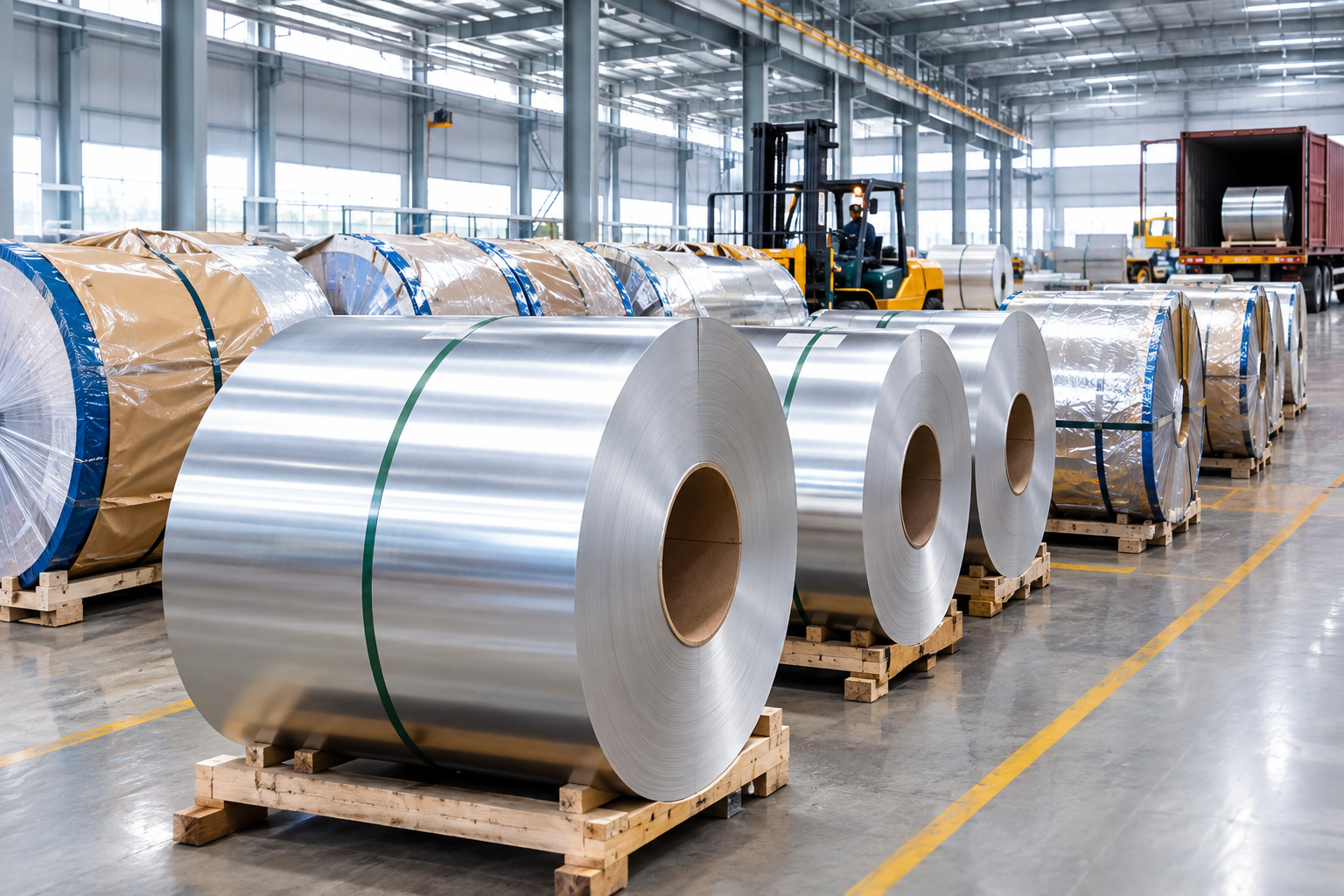
Mechanical-property limits for 5052 aluminum coil depend on temper and thickness. Procurement teams should obtain the correct table from the controlling standard rather than copy a typical value from a commercial datasheet. Typical values describe expected behavior; specification minimums and maximums determine acceptance.
The material certificate should identify alloy, temper, product form, thickness range, heat or lot traceability, and the tensile-test results required by the order. At a minimum, review tensile strength, yield strength where specified, and elongation. Confirm which specimen direction, gauge length, thickness range, and test method apply. A number without its test basis is not comparable.
For a heavily formed component, elongation and bend performance can be as important as tensile strength. For a panel or enclosure, flatness and surface quality may dominate. For welded work, the designer should consider the properties in and near the weld rather than relying only on mill-condition data. Qualification trials on production tooling are a better risk control than assuming that one successful temper will behave like another.
5. Describe Surface, Flatness, and Edge Quality
For 5052 aluminum coil, the phrase “mill finish” is too broad when appearance or coating adhesion matters. Tell the supplier which defects are unacceptable and which face is critical. Relevant items may include scratches, dents, roll marks, stains, oxide discoloration, oil residue, chatter, telescoping, edge burr, and flatness.
For visible or coated parts, establish an approved reference sample or written appearance criteria. State whether protective film is required, which side receives the film, film peel strength, maximum storage time, and whether the adhesive must tolerate later forming. Film can reduce handling damage, but unsuitable adhesive or excessive storage can create residue and removal problems.
Slit edges deserve separate attention. Specify maximum burr height when it affects operator safety, stamping, roll forming, or electrical insulation. Also state whether edge wave, camber, or coil set will interfere with feeding. These geometric conditions can exist even when thickness and width are correct.
6. Match 5052 Aluminum Coil to the Fabrication Route
The best 5052 aluminum coil temper is the one validated for the actual process. Before ordering, give the supplier a concise description of the downstream route: blanking, deep drawing, bending, roll forming, welding, machining, anodizing, painting, or adhesive bonding.
For severe forming, compare O and H32 through a controlled trial. Review the inside bend radius, bend direction relative to rolling direction, tooling clearance, lubrication, part depth, and cosmetic expectations. Harder tempers can provide higher strength but generally demand larger bend radii and tighter process control.
For welded assemblies, identify the welding process, filler selection, joint design, and post-weld service environment. 5xxx alloys are widely chosen for weldability and corrosion resistance, but a complete welding procedure still requires engineering qualification. For anodized or painted components, run an appearance and adhesion trial because alloy chemistry, surface preparation, mill finish, and process settings all influence the result.
7. Require Traceability and Inspection Evidence
A certificate is useful only when it can be matched to the physical coil. Ask for a material test certificate or inspection document that states the manufacturer, specification, alloy and temper, dimensions, coil or lot number, chemical-composition results, required mechanical properties, and release status.
At receipt, compare the coil labels, packing list, certificate, and purchase order. Record coil numbers before slitting or blanking destroys the original identity. If one master coil is divided into several slit coils, the processor should maintain a traceability map between master and child coils.
Consider a risk-based inspection plan:
- verify documents and labels for every coil;
- measure thickness and width at agreed positions;
- check inside diameter, outside diameter, and mass;
- inspect the outer wraps, edges, and critical surface;
- sample mechanical or chemical properties when contractually required;
- quarantine any coil with damaged packaging, water exposure, or identity mismatch.
8. Control Packaging, Storage, and Claims
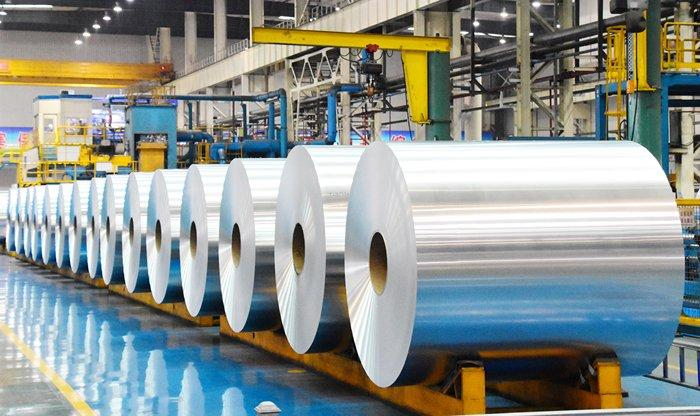
Aluminum forms a protective oxide film, but coils still need dry, stable packaging. Moisture trapped between wraps can produce staining; impacts can deform edges; unstable supports can cause handling damage. State the transport route and storage duration so the packaging system can be designed accordingly.
A typical export package may include moisture-resistant wrapping, edge protectors, secure bands, desiccant where appropriate, a robust pallet or skid, and labels visible without opening the package. Packaging details should not introduce steel-to-aluminum contact damage or trap water. Receiving teams should move wet or visibly damaged coils to a controlled inspection area rather than placing them directly into production.
The claims procedure belongs in the purchase order. Define the notification period, evidence required, sampling method, disposition of nonconforming material, and whether processing may continue after a defect is found. Photographs should show the label, overall coil, damage location, measuring device, and measurement result. Preserve representative samples and packaging until the claim is resolved.
5052 Aluminum Coil Order Checklist
| Order item | What to state | Why it matters |
|---|---|---|
| Material | 5052 plus exact temper | Controls strength and formability |
| Standard | Specification and revision | Defines acceptance rules |
| Dimensions | Thickness, width, ID, OD, mass | Ensures processing compatibility |
| Tolerances | Referenced standard or agreed limits | Prevents subjective acceptance |
| Surface | Critical face, finish, film, defect limits | Protects appearance and coating performance |
| Edges and shape | Edge type, burr, camber, flatness | Supports safe and stable feeding |
| Testing | Chemistry, tensile data, inspection level | Provides objective evidence |
| Documents | Certificate and coil-number traceability | Connects results to delivered material |
| Packaging | Protection, labeling, handling limits | Reduces transit and storage damage |
Buyers comparing broader alloy options can review our aluminum coil selection guide and aluminum coil specifications reference. For a project-specific quotation, send the full coil schedule through our contact page, including end use, temper, dimensions, tolerance standard, quantity, surface, and document requirements.
Frequently Asked Questions
Is 5052 aluminum coil heat treatable?
No. 5052 is a non-heat-treatable wrought aluminum-magnesium alloy. Strength is adjusted mainly through strain hardening and annealing, which is why the O and H-series temper designation must be included in the order.
What is the difference between 5052-O and 5052-H32?
O temper is annealed and normally offers greater formability. H32 is strain-hardened and stabilized to a quarter-hard condition, giving higher strength with lower forming margin. The correct choice depends on part geometry, bend radius, tooling, and required service strength.
Is ASTM B209 enough to place an order?
No. ASTM B209/B209M supplies product requirements and acceptance rules, but the buyer must still state alloy, temper, thickness, width, tolerances, coil dimensions, surface, edge, quantity, testing, certification, and packaging.
Can 5052 be used in marine environments?
The 5xxx family is known for corrosion resistance in marine environments, but suitability depends on the exact design, fabrication, contact with dissimilar metals, water chemistry, loading, and maintenance. A qualified engineer should review critical marine structures.
Which temper is best for bending?
There is no universal answer. O temper offers the greatest forming margin, while H32 is often selected when a formed part also needs higher strength. Verify minimum bend radius and direction with the applicable standard, supplier data, and a production-tool trial.
What documents should accompany a 5052 aluminum coil shipment?
Request a certificate identifying the producer, standard, alloy, temper, dimensions, coil or lot number, required chemistry and mechanical results, and inspection status. The coil label, packing list, and certificate should use matching traceability numbers.
Conclusion
A reliable 5052 aluminum coil purchase begins with a complete technical definition, not a price comparison alone. Specify the exact temper, governing standard and edition, dimensional limits, surface and edge requirements, mechanical-property evidence, traceability, packaging, and claims procedure. Then validate the material on the real forming, joining, and finishing route. These steps give the supplier an objective target and give the buyer a defensible acceptance plan.