
3003 aluminum coil is a non-heat-treatable aluminum-manganese product widely considered for formed sheet-metal parts that need moderate strength, good workability, weldability, and corrosion resistance. A reliable order requires more than the alloy number. Buyers must define temper, thickness, width, dimensional tolerances, surface, edge condition, mechanical-property limits, coil geometry, testing, traceability, packaging, and the intended fabrication route.
This guide converts those requirements into nine practical procurement checks. It is designed for buyers of coils used in heat exchangers, ductwork, insulation jacketing, tanks, general sheet-metal work, appliance components, and other formed products. Any numeric acceptance limit should come from the standard edition and drawing named in the purchase order rather than from a generic online datasheet.
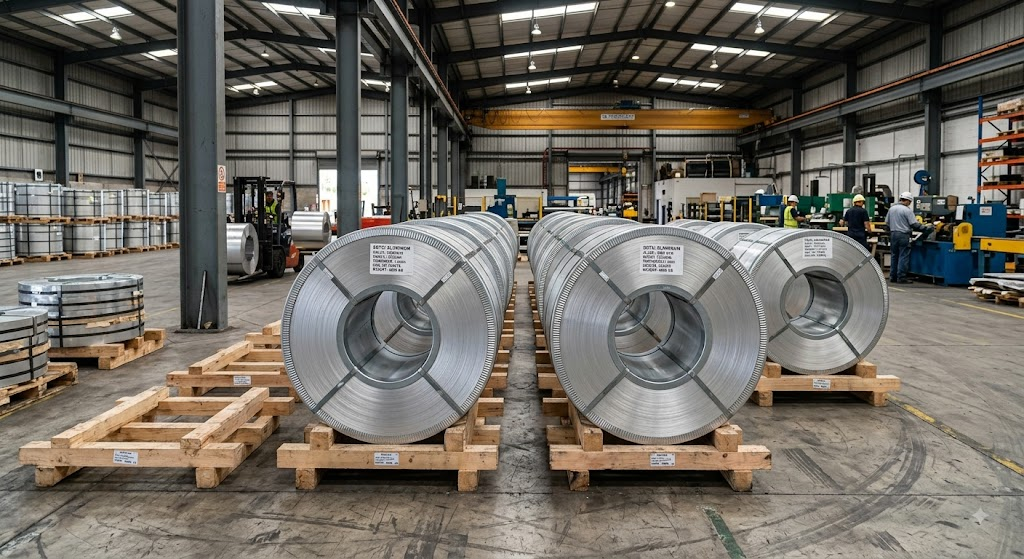
What Is 3003 Aluminum Coil?
3003 is a wrought 3xxx-series aluminum alloy in which manganese is the principal alloying addition. The Aluminum Association’s current international designation register lists manganese at 1.0–1.5%, copper at 0.05–0.20%, silicon up to 0.6%, iron up to 0.7%, zinc up to 0.10%, and aluminum as the remainder after permitted limits for other elements. These are composition limits, not a purchasing shortcut: delivered material still has to satisfy the product standard, temper, dimensions, and property limits specified by the buyer.
The Aluminum Association standards overview identifies 3003 as a popular general-purpose alloy with moderate strength and good workability, including uses such as heat exchangers and cooking utensils. Producer guidance from Hydro’s 3003 alloy reference also notes sheet-metal work, ductwork, fuel tanks, chemical equipment, spinning, and forming among typical applications. These examples explain the alloy’s market position, but the designer must still validate the material for the actual pressure, temperature, corrosion, fatigue, food-contact, or regulatory conditions.
For sheet and coiled sheet in many US and international purchase contracts, ASTM B209/B209M is the governing product specification. Its scope includes aluminum and aluminum-alloy flat sheet, coiled sheet, and plate in listed alloys and tempers. The contract should identify the exact revision and unit system because tolerances and test requirements cannot be reconstructed safely from an abbreviated commercial description.
1. Select the Correct 3003 Aluminum Coil Temper
Temper changes strength, elongation, bend behavior, springback, hardness, and forming limits. It must appear with the alloy designation everywhere the material is identified. Common sheet and coil conditions include O, H12, H14, H16, and H18, although availability and property requirements depend on thickness and the controlling specification.
- 3003-O is annealed and generally offers the greatest forming margin for severe drawing, spinning, or complex bends.
- 3003-H12 is a quarter-hard strain-hardened condition used when a modest strength increase is needed without moving directly to H14.
- 3003-H14 is a half-hard condition frequently considered for general sheet-metal fabrication and moderate forming.
- 3003-H16 and H18 are harder conditions that increase strength and springback while reducing forming reserve.
A 3003 aluminum coil purchase order that says only “3003” leaves a major performance variable unresolved. If a part was qualified in H14, an H18 substitution can change bending force, springback, flatness after forming, and cracking risk. State the complete designation, confirm the thickness-dependent property table, and require the same designation on the certificate and coil label.
2. Name One Governing Standard and Revision
A professional 3003 aluminum coil order should not combine fragments from several standards without a written hierarchy. Select the product standard that controls alloy, temper, mechanical properties, dimensional tolerances, sampling, and acceptance. Then list any supplementary requirements separately.
ASTM B209/B209M covers flat sheet, coiled sheet, and plate. Alloy and temper designations relate to the ANSI H35 system. The buyer still has to state product form, dimensions, finish, quantity, coil dimensions, required tests, and certification. If the project uses an EN, JIS, GB, ISO, or customer specification, do not assume that a similarly described grade is automatically interchangeable. Compare composition, temper definitions, minimum properties, tolerances, test methods, and marking requirements line by line.
Include the revision year in the inquiry and purchase order. This prevents the mill, distributor, fabricator, and third-party inspector from working to different editions. When a drawing cites an older edition, obtain written confirmation before replacing it with a current revision.
3. Define Thickness, Width, and Coil Geometry
Nominal dimensions are targets, while tolerances determine acceptance. For 3003 aluminum coil, the applicable thickness and width variation normally depends on the standard, ordered range, product form, alloy group, width, and measurement location.
Specify:
- nominal thickness and the applicable tolerance table or agreed special limit;
- ordered width and width tolerance;
- slit edge, mill edge, or another edge condition;
- inside diameter and permitted variation;
- target or maximum outside diameter;
- maximum and minimum coil mass where handling equipment has limits;
- permitted quantity variation by mass and number of coils;
- whether welds are prohibited, permitted, or subject to location rules.
Tighter is not always better. Unnecessarily narrow tolerances can increase trimming, sorting, yield loss, and price. Link every special tolerance to a real process need such as press clearance, fin stamping, automated feeding, roll forming, insulation-jacketing locks, or weight control.
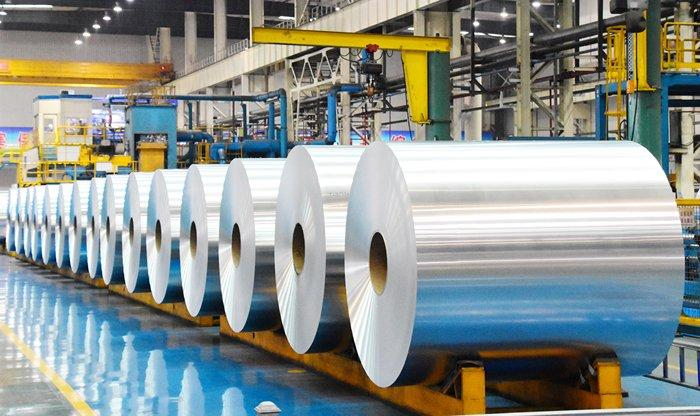
4. Confirm Mechanical Properties by Temper and Gauge
Mechanical-property limits for 3003 aluminum coil vary with temper and thickness. Commercial datasheets often show typical values, but typical values are not the acceptance limits in a material standard. Buyers should use the correct table for the specified product form, gauge range, temper, and revision.
Review tensile strength, yield strength where specified, and elongation. Confirm specimen orientation, gauge length, sampling frequency, and test method. For deep drawing or spinning, elongation and consistency across the coil can matter as much as tensile strength. For rigid jackets, panels, or ducts, yield strength, hardness, flatness, and springback may have greater production impact.
If the component is safety-related or process-critical, qualify the coil on representative production tooling. A certificate proves the reported lot met stated tests; it does not prove that every untested forming geometry, joint, coating, or service environment will succeed.
5. Match Surface Finish to the End Use
“Mill finish” is not a complete appearance specification. A buyer should identify the critical face and define unacceptable defects in language that can be inspected. Consider scratches, roll marks, dents, stains, oil residue, chatter, oxide discoloration, handling marks, and pressure lines.
Visible products may need an approved reference sample, controlled gloss expectations after finishing, or protective film. If film is required, state the protected face, film type, peel requirement, forming compatibility, storage duration, and removal conditions. An unsuitable adhesive can leave residue or become difficult to remove after heat or long storage.
For painted, laminated, anodized, bonded, or printed parts, the purchase specification should also address surface cleanliness and preparation. A small production trial is preferable to assuming that every mill finish responds identically to pretreatment and coating.
6. Control Edge, Flatness, Camber, and Coil Build
Correct 3003 aluminum coil thickness and width do not guarantee stable processing. Slit burr, edge wave, center buckle, camber, coil set, telescoping, and loose winding can interrupt feeding or damage finished parts. Define which shape characteristics matter to the line and how they will be measured.
For narrow slit coils, specify slit width, burr direction if important, maximum burr, winding tension expectations, and whether oscillated winding is allowed. For wide 3003 aluminum coil feeding a blanking or roll-forming line, confirm flatness and camber requirements. Coil build should be sufficiently even for safe handling and unwinding.
Do not use subjective phrases such as “perfect flatness.” Reference a recognized tolerance or an agreed measurement procedure, including sample length, support condition, measurement location, and instrument resolution.
7. Align the Alloy with Forming, Joining, and Finishing
3003 is non-heat-treatable. Its strength comes mainly from cold work rather than precipitation heat treatment. Fabrication planning should therefore focus on temper, bend radius, tooling clearance, work hardening, springback, and any annealing sequence.
For bending, state the inside radius, angle, material direction, and cosmetic face. For deep drawing or spinning, review blank size, draw ratio, lubrication, tool finish, and intermediate annealing where applicable. For roll forming, evaluate coil set, camber, edge condition, and hardness consistency.
When welding or brazing 3003 aluminum coil, qualify the procedure, filler, heat input, joint design, distortion control, and cleaning process. If the component is later anodized or painted, run a representative finish trial. The alloy can be suitable for fabrication while still requiring process controls to achieve the target appearance.
8. Require Traceability and a Useful Certificate
A certificate is valuable only when it maps to the delivered coil. Request a material test certificate or inspection document that identifies the producer, applicable specification and revision, alloy, temper, dimensions, coil or lot number, chemistry results, required mechanical properties, and release status.
At receipt, compare the label, packing list, certificate, and purchase order before removing the original identification. If a master coil is slit into several child coils, the processor should preserve a traceability map from each child coil back to the master identity and associated test evidence.
A risk-based incoming inspection can include:
- document and label verification for every coil;
- thickness and width measurements at agreed positions;
- inside diameter, outside diameter, and mass checks;
- surface, edge, and coil-build inspection;
- mechanical or chemical verification when contractually required;
- quarantine of wet, damaged, unlabeled, or mismatched material.
9. Specify Export Packaging and Claims Handling
3003 aluminum coil can be damaged by impact, unstable support, trapped moisture, dirt, and improper lifting. Define the transport mode, route, handling method, and anticipated storage period so the packaging matches the risk.
A practical export package may use moisture-resistant wrapping, edge protection, secure bands, a stable pallet or skid, desiccant when appropriate, and labels readable without opening the wrap. Packaging components should not trap water or create damaging metal-to-metal contact. Receiving personnel should isolate visibly wet or damaged packages for controlled inspection.
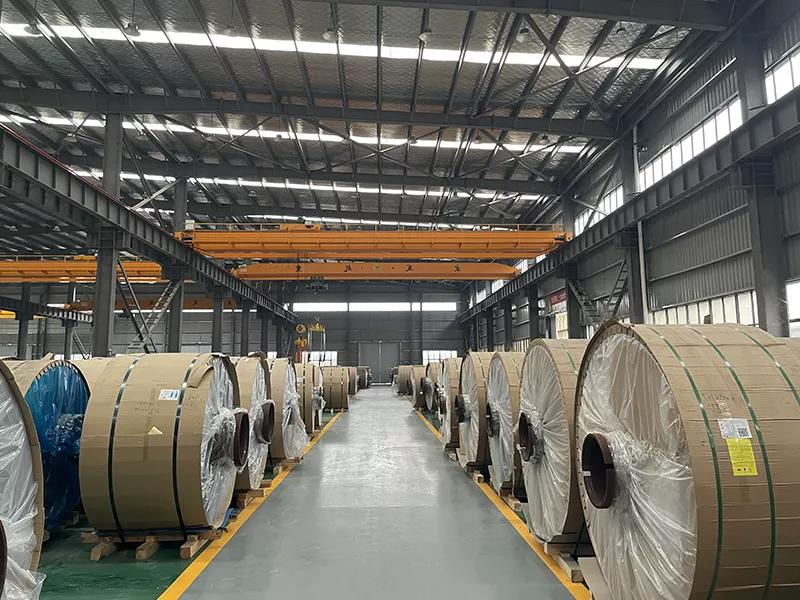
For 3003 aluminum coil shipments, define the claim-notification period, evidence required, sampling method, and disposition process in the contract. Photographs should show the coil label, overall package, damage location, measuring instrument, and recorded result. Keep representative samples and packaging until the supplier and buyer agree on disposition.
3003 Aluminum Coil Purchase Checklist
| Item | Required order detail | Procurement purpose |
|---|---|---|
| Alloy and temper | 3003-O, H12, H14, H16, or H18 as designed | Controls strength and forming behavior |
| Standard | Specification, revision, and unit system | Establishes acceptance rules |
| Dimensions | Thickness, width, ID, OD, and coil mass | Matches equipment and yield planning |
| Tolerances | Standard table or agreed special limits | Prevents subjective inspection |
| Surface | Critical face, finish, defect limits, film | Protects appearance and finishing |
| Shape and edge | Burr, camber, flatness, coil set, winding | Supports stable feeding |
| Properties | Required tensile, yield, and elongation evidence | Verifies the temper and lot |
| Traceability | Certificate plus matching coil numbers | Connects evidence to material |
| Packaging | Moisture, impact, edge, and handling protection | Reduces logistics damage |
Buyers comparing other alloy families can review our 5052 aluminum coil procurement guide and broader aluminum coil specifications reference. The two alloys should not be treated as automatic substitutes: 3003 is an aluminum-manganese alloy positioned for general-purpose formability, while 5052 is an aluminum-magnesium alloy often selected when higher strength and marine-corrosion performance are important. Engineering validation should control the final choice.
Frequently Asked Questions
Is 3003 aluminum coil heat treatable?
No. 3003 is a non-heat-treatable wrought alloy. Its strength is adjusted mainly through cold working and annealing, so the temper designation is essential to the order.
What is the difference between 3003-O and 3003-H14?
O temper is annealed and provides greater forming margin. H14 is a half-hard strain-hardened condition with higher strength and more springback. The correct condition depends on the part geometry and production process.
What standard is commonly used for 3003 aluminum coil?
ASTM B209/B209M is commonly specified for aluminum and aluminum-alloy sheet and plate, including coiled sheet in listed alloys and tempers. The buyer should name the exact revision and complete the order with dimensions, tolerances, finish, inspection, and packaging requirements.
Is 3003 suitable for heat exchangers?
The Aluminum Association lists heat exchangers among common 3003 applications. Suitability for a specific exchanger depends on pressure, temperature, fluid chemistry, joint design, corrosion allowance, regulatory requirements, and manufacturing qualification.
Can 3003 aluminum coil be anodized or painted?
It can be finished, but visual consistency and adhesion depend on surface condition, pretreatment, alloy chemistry, temper, and process settings. Buyers should approve a representative production sample before ordering appearance-critical volume.
What should be checked when the coil arrives?
Verify labels and certificates, then check dimensions, coil geometry, edge quality, surface condition, packaging integrity, and any contractually required properties. Record findings against the individual coil number before processing.
Conclusion
A dependable 3003 aluminum coil order combines the correct temper with a named product standard, measurable tolerances, agreed surface and shape requirements, traceable inspection evidence, suitable packaging, and an application-specific fabrication trial. This approach gives the supplier a clear manufacturing target and gives the buyer an objective basis for acceptance.
Request a 3003 Aluminum Coil Quotation
Send your alloy, temper, thickness, width, coil weight, quantity, end use, standard, surface, and inspection requirements:
- WhatsApp: +86 139 0543 6749
- Email: jenny@sbtgi.com
- Website: www.sbtgi.com