
6061 aluminum coil is a heat-treatable 6xxx-series product used when a project needs a stronger aluminum alloy with useful corrosion resistance, weldability, machinability, and a broad finishing range. The alloy number is only the starting point. Temper, thickness, width, heat-treatment route, flatness, surface, edge, coil geometry, and certification determine whether a coil will run correctly in a downstream process.
This B2B guide gives buyers nine checks for specifying and sourcing 6061 coil for fabricated panels, machined blanks, transport components, marine hardware, industrial enclosures, and other engineered parts. It also explains why T4, T6, and T651 should not be treated as interchangeable and why a supplier must confirm the requested form before quoting.
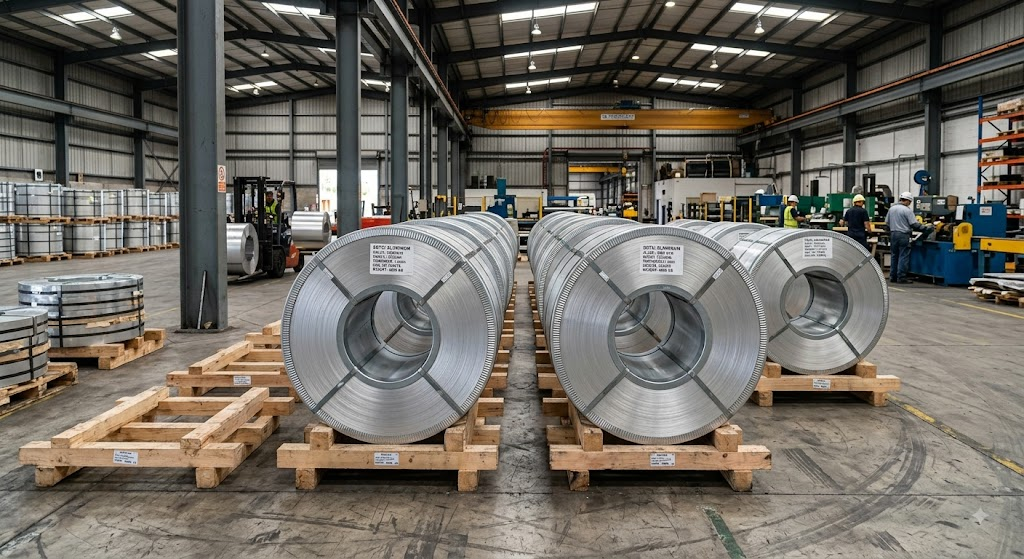
What Is 6061 Aluminum Coil?
6061 is a wrought aluminum-magnesium-silicon alloy in the 6xxx series. Hydro’s published alloy data lists silicon at 0.40–0.80%, magnesium at 0.80–1.20%, copper at 0.15–0.40%, chromium at 0.04–0.35%, with limits for iron, manganese, zinc, titanium, and other elements. Magnesium and silicon allow magnesium silicide to form during heat treatment, which is the foundation of the alloy’s strength response.
The Aluminum Association standards overview describes the 6xxx series as versatile, heat treatable, formable, weldable, and corrosion resistant. It identifies 6061 as the most widely used alloy in the series and notes use in truck and marine frames. Hydro describes 6061 as a heat-treatable alloy used in structural, marine, and automotive applications, especially where components will be welded or machined.
For sheet and coiled sheet, ASTM B209/B209M is a common product specification. ASTM’s scope covers aluminum and aluminum-alloy flat sheet, coiled sheet, and plate in listed alloys and tempers. The applicable edition, product form, unit system, and acceptance tables must be named in the order. A general 6061 datasheet is not a replacement for the controlling product standard.
1. Confirm That Coil Form Fits the Project
Not every 6061 temper, thickness, width, and surface combination is stocked as coil. Some suppliers primarily produce the alloy as sheet, plate, bar, or extrusion. A buyer should state “coiled sheet” explicitly and ask the mill or processor to confirm availability, maximum coil mass, slit capability, and the final temper after any leveling or cutting.
For a production line, also define whether the coil will be uncoiled, leveled, blanked, stamped, roll formed, machined after cutting, or sent to another heat-treatment step. Coil processing can change flatness, residual stress, edge condition, and the practical delivery temper. A 6061 aluminum coil quote that silently substitutes sheet for coil may create handling and yield problems.
2. Select the Correct 6061 Aluminum Coil Temper
Temper is the most important performance variable after alloy. In the 6061 family, buyers commonly encounter O, T4, T6, and T651-related conditions, but the exact product form and standard determine which designation is applicable.
- 6061-O is annealed and offers the greatest forming margin, but its strength is lower than solution-treated and aged conditions.
- 6061-T4 is solution heat treated and naturally aged to a stable condition. It is often chosen when a balance of formability and moderate strength is required before further forming.
- 6061-T6 is solution heat treated and artificially aged for substantially higher strength. It usually has less forming reserve and more springback than T4.
- 6061-T651 adds stress relieving, typically by stretching, to reduce residual stress in products where machining stability or dimensional control is important. The exact designation must match the product form and standard.
Do not replace T4 with T6 because both appear on a supplier’s general catalog. The change can affect bend radius, cracking, springback, machining distortion, and weld-zone properties. State the full temper on the drawing, purchase order, certificate, coil label, and inspection report.
3. Understand the Heat-Treatment Route
Unlike 3003 aluminum coil, 6061 can gain strength through solution heat treatment and aging. That benefit also introduces process dependencies. The 6061 aluminum coil supplier should explain whether the ordered coil is delivered in the requested temper, whether it will be leveled after aging, and how the process controls thickness, flatness, and residual stress.
Solution treatment dissolves the relevant alloying phases at elevated temperature, followed by rapid cooling. Natural or artificial aging then develops the required strength. The exact cycle, quench delay, furnace uniformity, transfer time, and aging practice are controlled by the producer’s qualified process. Buyers should not invent a temperature-time schedule from a generic internet table.
For 6061 aluminum coil, ask whether any subsequent blanking, forming, welding, or stress relieving changes the final condition. If the part is formed in T4 and then aged to a higher-strength condition, the contract should describe the responsible party, required cycle, test evidence, and final acceptance state.
4. Use the Correct Product Standard and Revision
A professional 6061 aluminum coil order needs one governing product standard. ASTM B209/B209M is commonly used for sheet and coiled sheet, but a project may instead cite EN, JIS, GB, ISO, or a customer specification. Similar alloy numbers do not guarantee identical temper definitions, tolerance tables, testing, or marking rules.
Write the standard and revision in the inquiry. Identify whether inch-pound or metric requirements apply. Add supplementary requirements for surface finish, flatness, edge, coil dimensions, testing frequency, certificate type, and inspection agency. The Aluminum Association’s Aluminum Standards and Data reference is useful for terminology and alloy data, but the product standard remains the acceptance basis.
5. Lock Down Thickness, Width, and Flatness
Nominal dimensions do not define allowable variation. For 6061 aluminum coil, applicable tolerances depend on thickness, width, product form, alloy and temper, and the referenced standard. Define how the dimensions will be measured and at what positions.
- nominal thickness and thickness tolerance;
- ordered width and width tolerance;
- mill edge or slit edge;
- inside diameter, outside diameter, and maximum coil mass;
- flatness, waviness, camber, and coil set requirements;
- permitted welds or joints and their locations;
- quantity tolerance and number of coils.
Tight tolerances should be connected to a real production requirement. An automatic blanking line may need different flatness and camber controls from a manual fabrication shop. A machined blank may need low residual stress more than a very tight width tolerance. State the critical characteristic and the receiving measurement method instead of adding vague “premium” language.
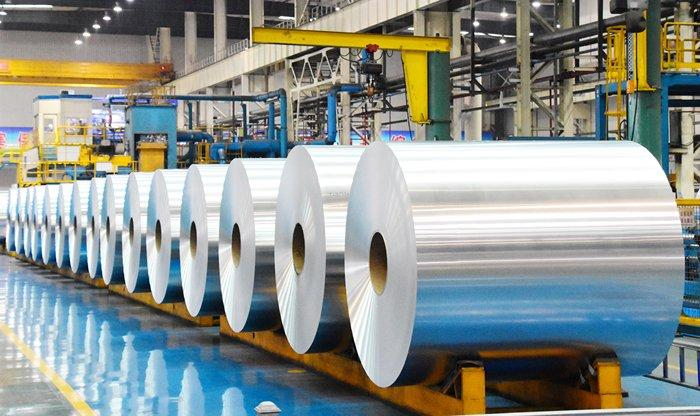
6. Match Temper to Forming and Machining
T4 generally offers more forming margin than T6, while T6 offers higher strength. If the part requires severe bending, drawing, or spinning, qualify the geometry in the delivered condition. When forming 6061 aluminum coil, review bend radius, bend direction relative to rolling direction, tooling clearance, lubrication, and the amount of springback expected.
Machining introduces a different concern. Residual stress can cause a blank or machined component to move after material is removed. A stress-relieved product or an appropriate temper may be preferable, but the choice must be confirmed against the drawing and standard. If the coil will be blanked and later machined, preserve traceability between the parent coil and the cut blanks.
For roll forming or stamping, check hardness consistency across the width and along the coil. A correct average tensile value does not eliminate local variation, camber, coil set, or edge damage that can interrupt a high-speed line.
7. Review Welding, Corrosion, and Finishing
6061 is commonly selected for weldable and corrosion-resistant designs, but welding changes the local microstructure and usually reduces strength in the heat-affected zone. The engineer should qualify the welding process, filler, joint design, heat input, distortion control, cleaning, and post-weld inspection.
Hydro’s 6061 references describe good resistance to atmospheric and seawater corrosion, but service suitability still depends on exposure, stress, crevices, galvanic contact with dissimilar metals, coating, and maintenance. Do not use a general alloy statement as a corrosion guarantee for a critical marine or chemical application.
Anodizing, painting, powder coating, bonding, and printing all depend on surface preparation. Define whether the coil is mill finish, bright finish, cleaned, protected by film, or prepared for a specified coating system. Approve a production sample when color, gloss, adhesion, or cosmetic uniformity is important.
8. Require Traceability and Property Evidence
A useful certificate should identify the producer, standard and revision, alloy, temper, thickness, width, coil or lot number, chemical composition, mechanical-property results, and release status. Make sure the certificate distinguishes minimum or maximum specification limits from typical reference values.
When 6061 aluminum coil arrives, compare the coil label, packing list, certificate, purchase order, and drawing. Do not remove the original label before recording the identity. If a master coil is slit, create a traceability map linking every child coil to the parent lot and test evidence.
A practical inspection plan includes:
- label and document verification for every coil;
- thickness, width, ID, OD, and mass measurements;
- surface, edge, flatness, and winding inspection;
- review of tensile, yield, and elongation data for the specified temper;
- additional chemical or mechanical sampling when required by contract;
- quarantine of wet, damaged, unlabeled, or mismatched material.
9. Control Packaging and Storage
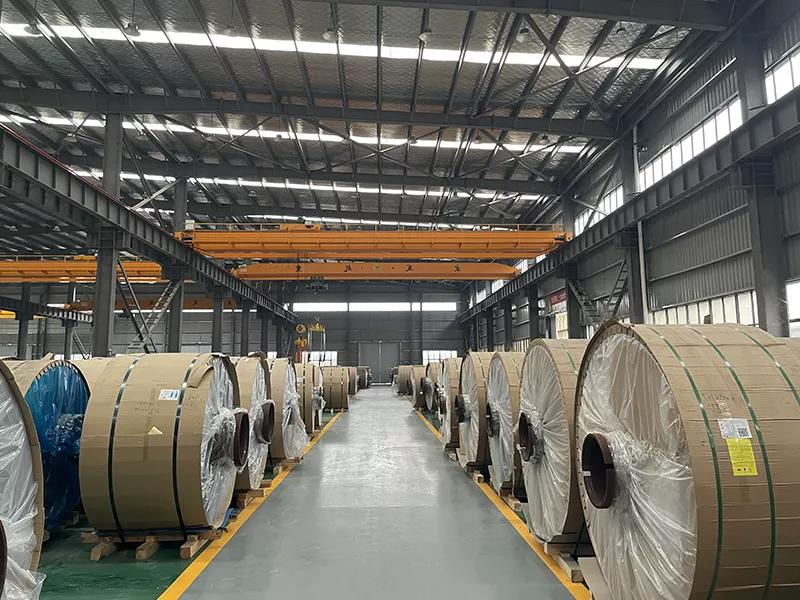
Aluminum coil can be damaged by impact, trapped moisture, unstable supports, contamination, and poor lifting. Define export wrapping, edge protectors, bands, skid or pallet design, label visibility, desiccant requirements, and storage orientation.
Packaging for 6061 aluminum coil should protect the slit edges and avoid trapping water between wraps. Receiving teams should move wet or damaged packages to a controlled inspection area instead of feeding them directly into production. The contract should define the claim-notification period, evidence required, sampling method, and disposition process.
6061 Aluminum Coil Purchase Checklist
| Order item | What to define | Why it matters |
|---|---|---|
| Product form | Coiled sheet, not a generic sheet or plate | Confirms processing and supply route |
| Alloy and temper | 6061-O, T4, T6, T651, or specified equivalent | Controls forming, strength, and stress |
| Standard | Specification, revision, and units | Sets acceptance rules |
| Dimensions | Thickness, width, ID, OD, and mass | Matches equipment and yield |
| Shape | Flatness, camber, coil set, winding | Supports stable feeding |
| Surface and edge | Finish, film, burr, critical face | Protects fabrication and appearance |
| Testing | Chemistry, tensile, yield, elongation | Verifies the ordered temper |
| Traceability | Certificate and matching coil numbers | Connects evidence to delivery |
| Packaging | Moisture, impact, and handling controls | Reduces logistics damage |
For comparison, our 3003 aluminum coil guide covers a non-heat-treatable alloy with a different temper logic. Buyers sourcing 6061 aluminum coil can also review the broader aluminum coil selection guide before sending a project specification.
Frequently Asked Questions
Is 6061 aluminum coil heat treatable?
Yes. 6061 is a heat-treatable aluminum-magnesium-silicon alloy. T4 and T6 describe different heat-treatment and aging conditions, while stress-relieved designations such as T651 add another condition that must match the product form and standard.
What is the difference between 6061-T4 and 6061-T6?
T4 is solution heat treated and naturally aged, generally offering more forming margin. T6 is solution heat treated and artificially aged for higher strength, usually with more springback and less forming reserve.
Can every 6061-T6 product be supplied as coil?
No. Availability depends on thickness, width, processing route, flatness, and the producer’s qualified capabilities. Ask the supplier to confirm coiled-sheet form and the delivered temper before comparing quotations.
Is 6061 suitable for marine use?
6061 is used in some marine frames and components, but service suitability depends on stress, seawater exposure, galvanic contact, weld zones, coating, design details, and maintenance. A qualified engineer should approve critical marine applications.
What test documents should accompany 6061 aluminum coil?
Request a certificate identifying the producer, standard and revision, alloy, temper, dimensions, coil or lot number, chemical results, required tensile properties, elongation, and release status. Match every document to the physical coil label.
Why can a 6061 coil move after machining?
Machining can release residual stress, causing dimensional movement. Temper selection, stress-relief practice, blank size, machining sequence, and support strategy should be reviewed when tight final tolerances are required.
Conclusion
A dependable 6061 aluminum coil order is built around the correct product form, temper, heat-treatment route, dimensional limits, surface and edge requirements, traceable test evidence, and packaging controls. Define those items before requesting a price, then validate the material on the actual forming, machining, welding, and finishing route. This creates an objective acceptance plan and reduces substitutions that look equivalent on paper but behave differently in production.
Request a 6061 Aluminum Coil Quotation
Send your alloy, temper, thickness, width, coil weight, quantity, end use, standard, surface, and inspection requirements:
- WhatsApp: +86 139 0543 6749
- Email: jenny@sbtgi.com
- Website: www.sbtgi.com