
Aluminum coil slitting tolerance is a critical purchasing requirement for manufacturers that convert wide master coils into narrow strips. A coil can meet the alloy and temper specification yet still create scrap, tracking problems, burrs, or unstable feeding if slit width, camber, burr height, and edge condition are not controlled together. This guide explains the technical checks buyers should include before ordering slit aluminum coil.
What aluminum coil slitting tolerance means
Aluminum coil slitting tolerance is the permitted variation between the ordered strip width and the measured width at defined locations. It is not a single number for every order. The practical tolerance depends on alloy, temper, thickness, width, slitter setup, knife condition, inspection method, and the end-use process. A responsible quotation should state nominal width, tolerance band, measurement location, sampling frequency, and the reference standard or agreed drawing.
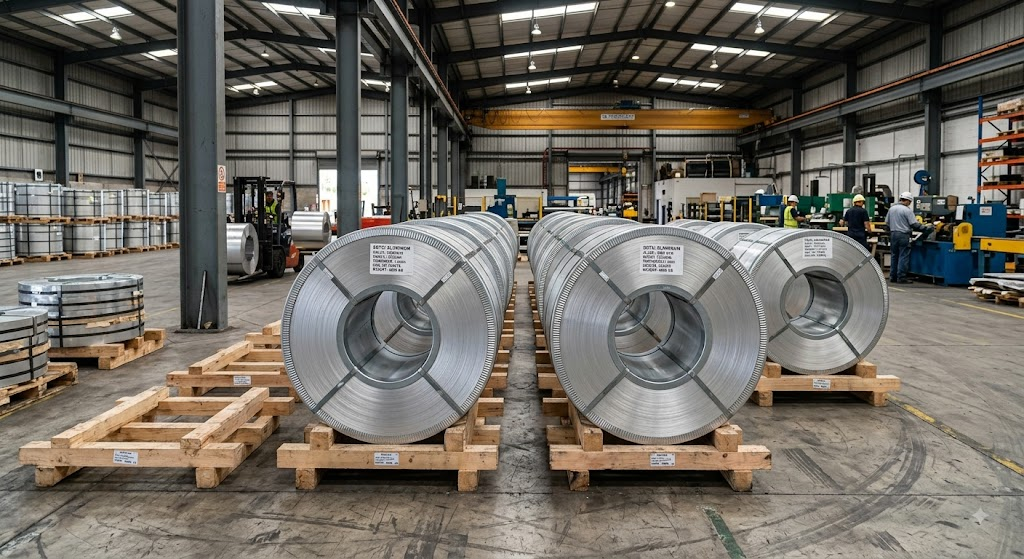
1. Define the finished strip width
For aluminum coil slitting tolerance, start with the converting line rather than the supplier catalogue. Record the target width, number of mults, allowable trim loss, core inside diameter, outside diameter, maximum coil weight, and winding direction. If the strip feeds a roll former, stamping press, heat exchanger fin line, or panel line, explain the actual guide and tooling limits. A tolerance that looks acceptable on paper may be too wide for a high-speed line.
2. Separate width tolerance from camber
Aluminum coil slitting tolerance involves more than width: width variation and camber are different defects. Width measures the distance across the strip; camber describes the deviation of the edge from a straight reference line. A strip can have correct average width but still wander laterally because of camber, uneven tension, or knife alignment. Include a camber limit and measurement method in the purchase specification, especially for narrow strips and automatic feeding.
3. Match tolerance to thickness and temper
Thin material is more sensitive to knife clearance, tension, edge wave, and handling damage. Hard tempers can generate a different burr profile from soft or annealed material. For 3003, 5052, 6061, or other alloys, the supplier should confirm the requested temper before slitting and explain whether leveling or tension correction will be used. Do not copy a width tolerance from a thicker product without checking process capability.
4. Control burr height and edge condition
Burrs can cut operators, damage insulation, interfere with stamping, or create cracks during bending. Ask for a maximum burr height, edge roll limit, and visual acceptance standard. The slitter should control circular knife overlap, clearance, knife sharpness, separator discs, and strip tension. For painted, anodized, or adhesive-laminated products, specify whether the slit edge must be free from coating lift, flaking, or lubricant contamination.
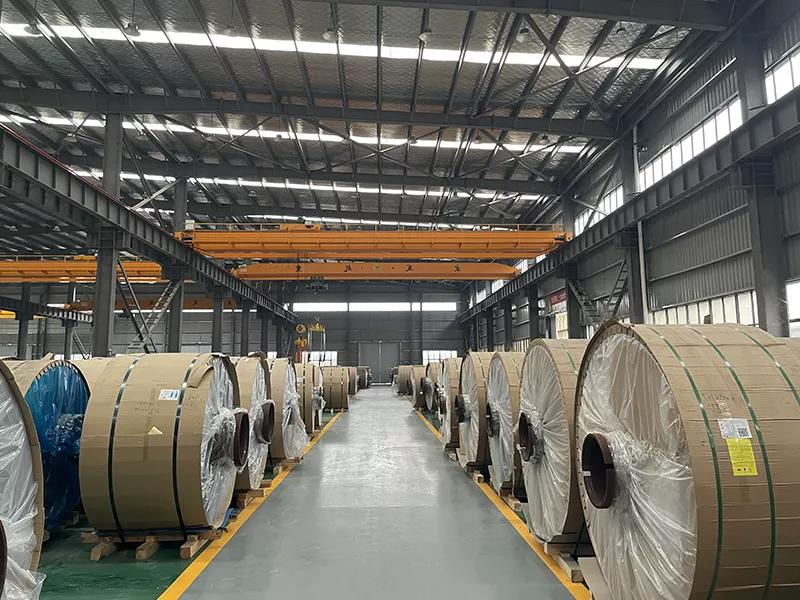
5. Confirm measuring equipment and sampling
For aluminum coil slitting tolerance, measurement results are meaningful only when the method is repeatable. Confirm whether width is measured with calibrated digital gauges, a certified steel rule, or an optical system. State whether measurements are taken at the head, middle, and tail of each slit coil, and how many points are checked across the width. For critical orders, request a dimensional inspection report linked to coil numbers rather than a generic certificate.
6. Check winding and telescoping risk
A narrow strip can telescope, loosen, or develop an uneven edge if tension and separator settings are unstable. Ask for acceptable telescoping, coil squareness, inner-diameter condition, and winding tightness. The packaging must prevent edge impact during lifting and transport. If the material will be stored for several months, specify moisture protection and a method to avoid condensation under wrapping.
7. Link slit width to yield and nesting
Aluminum coil slitting tolerance is also a yield decision. Before approving a mult, compare the master-coil width with the required strip combination, side trim, knife clearance, and expected scrap. A slightly different strip width may improve yield without harming the customer’s process, but the change must be approved by engineering. Ask the supplier to show the proposed slitting pattern and identify which strips come from the edge of the master coil.
8. Require traceability from master coil to slit coils
Every slit coil should remain traceable to the parent heat, alloy, temper, thickness, and inspection record. Labels should show slit width, actual weight, coil number, direction, and handling limits. For regulated or safety-related products, retain the parent mill certificate and the slitting inspection report together. This makes it easier to isolate a problem without placing the entire shipment on hold.
9. Use a first-article approval for critical orders
When the slit material feeds a new tool or production line, approve a first article before releasing the full quantity. Measure width, camber, burr, surface, coil set, winding, and feeding behavior. Record the actual line speed and forming result. A first-article review often reveals that the real control point is not nominal width but edge quality, tension, or coil shape.
10. Put the requirements in the purchase order
Do not rely on a message or verbal promise. The purchase order should list alloy, temper, thickness, nominal width, tolerance, camber, burr, surface condition, core, coil weight, packaging, inspection documents, and nonconformance handling. Reference the applicable product standard, such as ASTM B209/B209M where relevant, and attach a drawing for unusual slit profiles.
Aluminum coil slitting tolerance checklist
| Item | What to define |
|---|---|
| Width | Nominal value, plus/minus tolerance, measuring points |
| Edge | Burr height, edge roll, coating or foil damage |
| Shape | Camber, coil set, telescoping, winding tightness |
| Material | Alloy, temper, thickness, surface and certificate |
| Packaging | Core, straps, edge guards, moisture barrier and labels |
FAQ
Is aluminum coil slitting tolerance the same for every alloy?
No. Alloy, temper, thickness, and slitting conditions influence achievable width and edge quality. The supplier should confirm capability for the exact combination.
Why can correct width still cause feeding problems?
Camber, coil set, telescoping, edge wave, or excessive burr can make a strip wander even when average width is within tolerance.
What documents should accompany slit coil?
Request the mill certificate, dimensional inspection report, coil identification, packaging record, and any agreed first-article or surface inspection record.
Can tighter tolerance always be ordered?
Not automatically. Tighter limits may require slower line speed, additional inspection, special tooling, or a different slitting route. Confirm capability and cost before placing the order.
For a broader material comparison, review our aluminum coil selection guide and related 3003 aluminum coil checks. ASTM B209/B209M provides a useful reference for flat aluminum products, while the final slit-width requirement should still be agreed with the converter and supplier.
Contact SBTGI
For aluminum coil slitting tolerance advice and export quotations:
- WhatsApp: +86 139 0543 6749
- Email: jenny@sbtgi.com
- Website: www.sbtgi.com