
Z275 galvanized coil is hot-dip zinc-coated steel with a minimum total coating mass of 275 g/m² across both surfaces under common SI coating-designation systems. It is widely specified for exposed ductwork, roofing components, structural profiles, cable trays, enclosures, and other products that need more corrosion protection than lighter zinc coatings. However, Z275 does not identify the base-steel grade, thickness tolerance, surface finish, passivation, or expected service life. Buyers must specify those items separately.
This guide explains what Z275 means, how it relates to G90, why coating mass is not the same as coating thickness, and which seven checks should be completed before a purchase order is released.

What Does Z275 Mean?
The letter Z identifies a zinc coating. The number 275 identifies the minimum total coating mass in grams per square metre, normally measured across both faces of the sheet using the applicable test and averaging rules. It is not 275 g/m² on each side. This distinction matters because a quotation stated “per side” would describe a very different coating quantity.
SSAB’s EN 10346 product data lists Z275 galvanized coil as 275 g/m² minimum total coating mass for both surfaces and gives about 20 µm per surface as a typical guidance value. That thickness is informative rather than a universal acceptance value because zinc density, test location, surface variation, and the standard’s sampling rules affect the relationship between mass and thickness.
Is Z275 the Same as G90?
Z275 and G90 are commonly treated as corresponding SI and inch-pound coating designations for hot-dip galvanized sheet. GalvInfo Center’s coating-designation summary pairs ASTM A653/A653M Z275 with G90: 275 g/m² total coating mass for the SI designation and 0.90 oz/ft² total coating weight for the inch-pound designation.
They should not be converted by multiplying a single nominal number alone. Each designation belongs to a standard with its own terminology, test method, minimum values, and reporting rules. The purchase order should name the governing standard and use the coating designation from that standard. If a buyer requests EN 10346 material, write Z275. If the contract uses ASTM A653/A653M inch-pound requirements, G90 may be the appropriate designation. Always confirm the current edition agreed by both parties.
Z275 Compared With Lighter and Heavier Zinc Coatings
| Designation | Minimum total coating mass, both surfaces | Typical zinc thickness per surface | Procurement interpretation |
|---|---|---|---|
| Z100 | 100 g/m² | About 7 µm | Light coating for controlled exposure or downstream painting |
| Z140 | 140 g/m² | About 10 µm | Moderate indoor protection |
| Z180 | 180 g/m² | About 13 µm | Common intermediate option |
| Z275 | 275 g/m² | About 20 µm | Stronger general-purpose corrosion protection |
| Z350 | 350 g/m² | About 25 µm | Heavier exposure requirement |
| Z450 | 450 g/m² | About 32 µm | High coating mass where the product and forming process permit it |
The coating data above follows SSAB’s published EN 10346 tables and is useful for comparison. It does not mean that every substrate grade, thickness, surface quality, or coil width is commercially available in every coating designation. Mills may limit heavy coatings on difficult forming grades or thin gauges. Availability must be confirmed for the exact combination.
Does Z275 Guarantee a Specific Service Life?
No. Z275 galvanized coil provides a larger sacrificial coating reserve, and SSAB notes that cathodic corrosion protection increases with coating thickness. But service life also depends on atmospheric corrosivity, time of wetness, airborne salinity, sulfur dioxide, temperature-humidity conditions, cut edges, forming damage, drainage, design details, storage, and maintenance.
ISO 9223 classifies atmospheric corrosivity using environmental exposure and first-year corrosion-rate information. It identifies the temperature-humidity complex, sulfur dioxide pollution, and airborne salinity as key factors. Therefore, a buyer should not request “20-year life” based only on Z275. The designer should first define the environment and then evaluate coating selection, detailing, and any supplementary paint system.
Indoor dry equipment and coastal outdoor ductwork can both use galvanized steel, but their exposure conditions are not equivalent. For critical projects, obtain a corrosion assessment or coating recommendation tied to the actual location and component geometry.
7 Checks Before Buying Z275 Galvanized Coil
1. Name the Governing Standard and Current Edition
Start the order with the standard. EN 10346 covers continuously hot-dip coated steel flat products for cold forming and structural applications. ASTM A653/A653M covers hot-dip zinc-coated and zinc-iron alloy-coated steel sheet in coils and cut lengths. The ASTM product page identifies A653/A653M-25a as the current active edition at the time of writing.
Do not mix an EN grade with ASTM tolerances unless the contract explicitly defines the cross-standard requirements. A statement such as “DX51D+Z275 to EN 10346, dimensional tolerances to EN 10143” is clearer than “ASTM Z275 GI coil.”
2. Specify the Base-Steel Grade
Z275 galvanized coil only describes the coating. The substrate determines strength and formability. Typical commercial requests may use DX51D for general forming, DX52D or higher-formability grades for more demanding shapes, or structural grades such as S250GD and S350GD when yield strength matters.
Match the grade to the forming route. Tight bends, deep drawing, lock forming, and roll forming impose different strain paths. Request mechanical-property certificates and, where necessary, conduct a representative trial before approving mass production.
3. Confirm Coating Mass and Test Basis
State whether the acceptance requirement is a triple-spot average, single-spot minimum, or another contract value defined by the governing standard. The words “275 g/m²” are incomplete if sampling and minimum values are not understood.
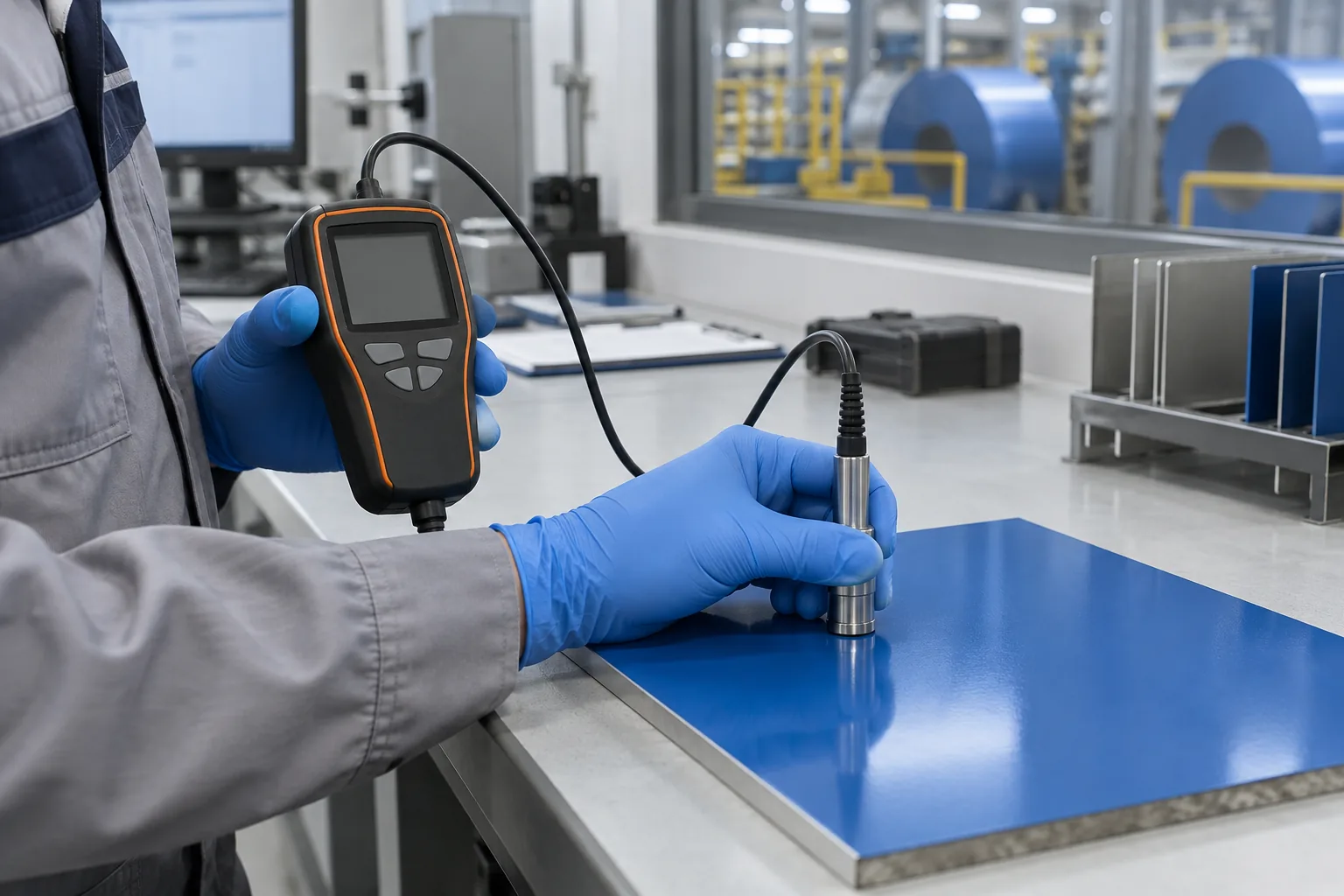
Common verification methods for Z275 galvanized coil include weigh-strip-weigh and X-ray fluorescence. XRF is fast and nondestructive, while laboratory mass-loss testing can provide a reference measurement. Agree on calibration, test locations, reporting units, and dispute resolution before shipment.
4. Check Thickness, Width, and Tolerance Correctly
For Z275 galvanized coil, clarify whether the ordered sheet thickness refers to base-metal thickness, coated thickness, or the convention used by the relevant standard. Zinc contributes to total measured thickness. The distinction becomes more significant for thin sheet and tight manufacturing tolerances.
List nominal thickness, width, edge condition, camber limits, and coil inside diameter. If the coil will be roll formed, specify flatness and shape expectations that affect line stability. SBTGI’s galvanized steel coil supplier guide provides a broader RFQ checklist.
5. Define Surface Finish and Post-Treatment
When ordering Z275 galvanized coil, choose regular, minimized, or zero-spangle appearance where applicable, but do not confuse appearance with coating mass. Also specify skin pass, surface quality, oiling, passivation, anti-fingerprint treatment, or a dry surface as required by downstream operations.
Post-treatment affects storage staining, paint preparation, bonding, welding, and handling. If the material will be painted, verify compatibility with the cleaning and pretreatment system. If it will remain unpainted, define the expected storage and transport protection.
6. Evaluate Forming and Cut-Edge Risk
Heavier zinc coatings can behave differently during severe forming. Powdering, flaking, surface marking, or coating damage may occur if the grade, tool geometry, lubrication, and bend radius are unsuitable. Ask the supplier whether the proposed grade-and-coating combination is recommended for the intended part.
Cut edges and punched holes expose steel. Zinc provides sacrificial protection near small exposed areas, but poor drainage, trapped debris, and constant wetness can accelerate attack. Design the component to shed water and avoid crevices rather than relying on coating designation alone.
7. Review Certificates, Packaging, and Storage
Before shipment, match each Z275 galvanized coil number with its inspection certificate. Check the standard, grade, coating designation, dimensions, mechanical properties, surface treatment, net weight, and heat or batch traceability.
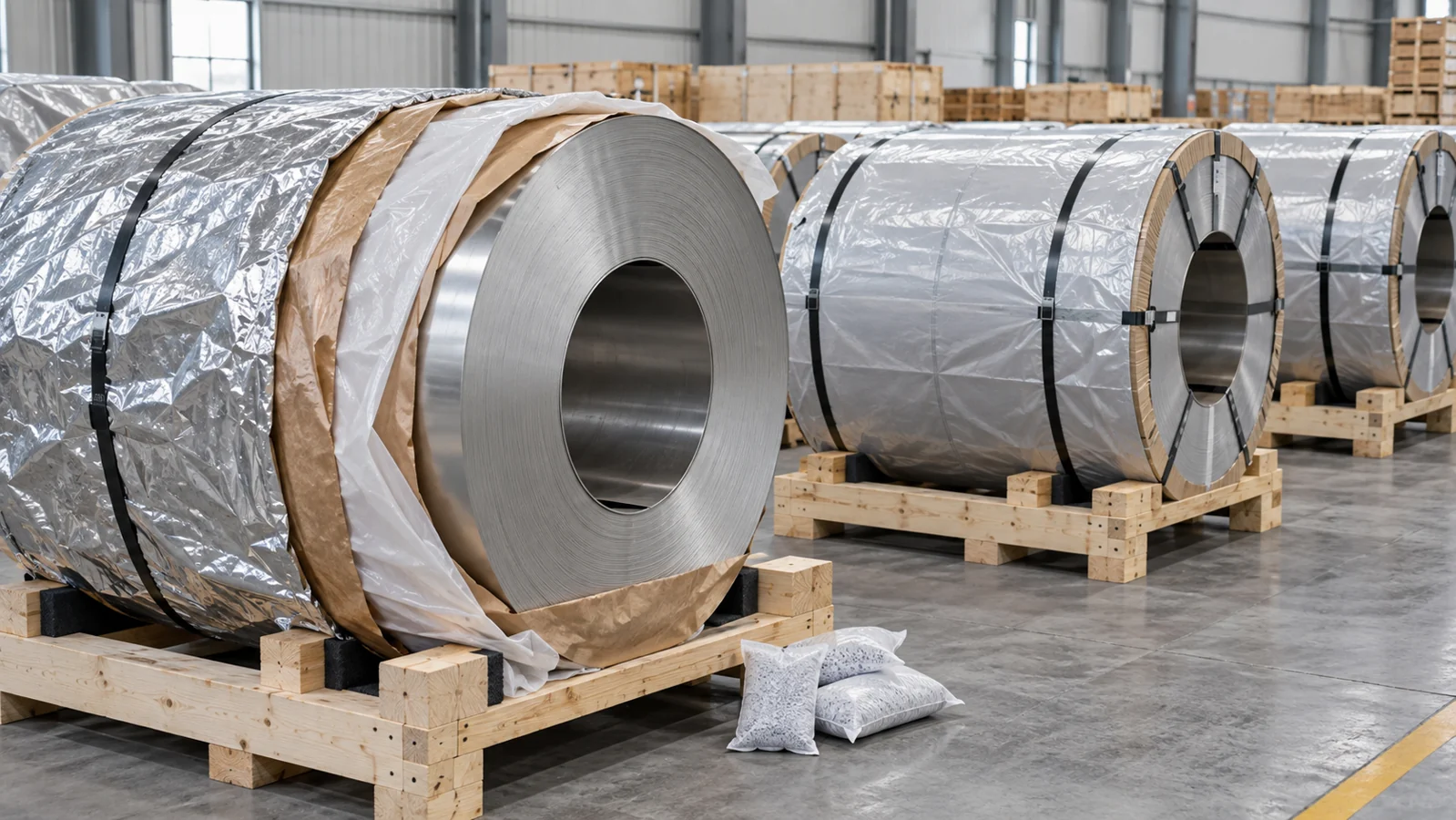
Packaging should prevent water entry while allowing safe handling. Condensation during ocean transport or warehouse temperature changes can cause white rust even on Z275 material. Keep coils dry, avoid contact with wet packaging, and inspect promptly on arrival. See SBTGI’s guide to white rust on galvanized steel coil for practical storage controls.
Recommended RFQ Format
Hot-dip galvanized steel coil; governing standard and edition; base-steel grade; Z275 coating designation; nominal base-metal or coated thickness as defined by the standard; width and tolerances; surface quality; spangle requirement; skin-passed condition; passivation and oil condition; coil ID and maximum coil mass; edge condition; packaging; inspection document; intended forming process; and final service environment.
Add an approved surface sample when appearance matters. If a specification requires asymmetric coating, paint compatibility, weldability, or enhanced flatness, list it as a separate requirement rather than assuming it is included in Z275.
Common Buying Mistakes
Reading 275 g/m² as a Per-Side Value
Under the common designation, 275 g/m² is the minimum total coating mass for both surfaces. Do not double it when comparing quotations.
Assuming Z275 Defines the Steel Grade
The substrate grade and mechanical properties must be ordered separately.
Promising Service Life From Coating Mass Alone
Corrosivity, drainage, cut edges, maintenance, and supplementary coatings all affect durability.
Accepting an Unclear G90 Conversion
Name the governing standard and use its designation. Treat Z275 and G90 as corresponding systems, not permission to mix unrelated tolerances or grade requirements.
Conclusion
Z275 galvanized coil offers a useful balance of zinc protection, formability, and commercial availability for many construction and industrial applications. Its 275 g/m² designation refers to minimum total coating mass across both surfaces, while approximately 20 µm per surface is only a typical guidance value.
A reliable Z275 galvanized coil order must combine the correct standard, substrate grade, thickness convention, surface finish, post-treatment, inspection method, packaging, and service environment. That complete specification is more valuable than selecting a coating number in isolation.
Frequently Asked Questions
How thick is the zinc on Z275 galvanized coil?
Published EN 10346 product data gives about 20 µm per surface as a typical guidance value. The contractual requirement is coating mass under the specified test rules, not an exact universal thickness at every point.
Is Z275 equal to G90?
They are commonly corresponding SI and inch-pound coating designations under ASTM A653/A653M. Z275 represents 275 g/m² total both sides, while G90 represents 0.90 oz/ft² total both sides. Use the designation required by the governing standard.
Is Z275 suitable for outdoor roofing?
It is commonly considered for exposed construction components, but suitability depends on the local corrosivity, roof design, cut edges, drainage, maintenance, and whether a paint system is required. A project-specific durability assessment is recommended.
Does Z275 prevent white rust?
No. White rust can develop when fresh galvanized surfaces remain wet with limited airflow. Passivation, suitable packaging, dry storage, ventilation, and prompt inspection are still necessary.
Can Z275 galvanized steel be painted?
Yes, provided the surface treatment, cleaning, pretreatment, primer, and curing process are compatible. Confirm whether the coil is passivated, oiled, or supplied with another treatment before painting.
What should appear on a Z275 material certificate?
The certificate should identify the governing standard, steel grade, coating designation, dimensions, mechanical properties, coil or batch traceability, and any required coating-test results or inspection-document level.
Authoritative Sources
- SSAB: Metal-Coated Structural Steels to EN 10346 — coating masses, indicative per-side thickness, coating types, and the relationship between coating thickness and cathodic protection.
- International Zinc Association / GalvInfo Center: Zinc Coating Designations — Z275 and G90 equivalence and total-both-sides designation conventions.
- ASTM A653/A653M-25a — current specification scope for hot-dip galvanized and galvannealed steel sheet.
- ISO 9223:2012 — atmospheric corrosivity classification and the environmental factors that affect corrosion.